Harvard Business School: Errors Deliberately Planted in AI Output Sharpen Reviewers' Attention
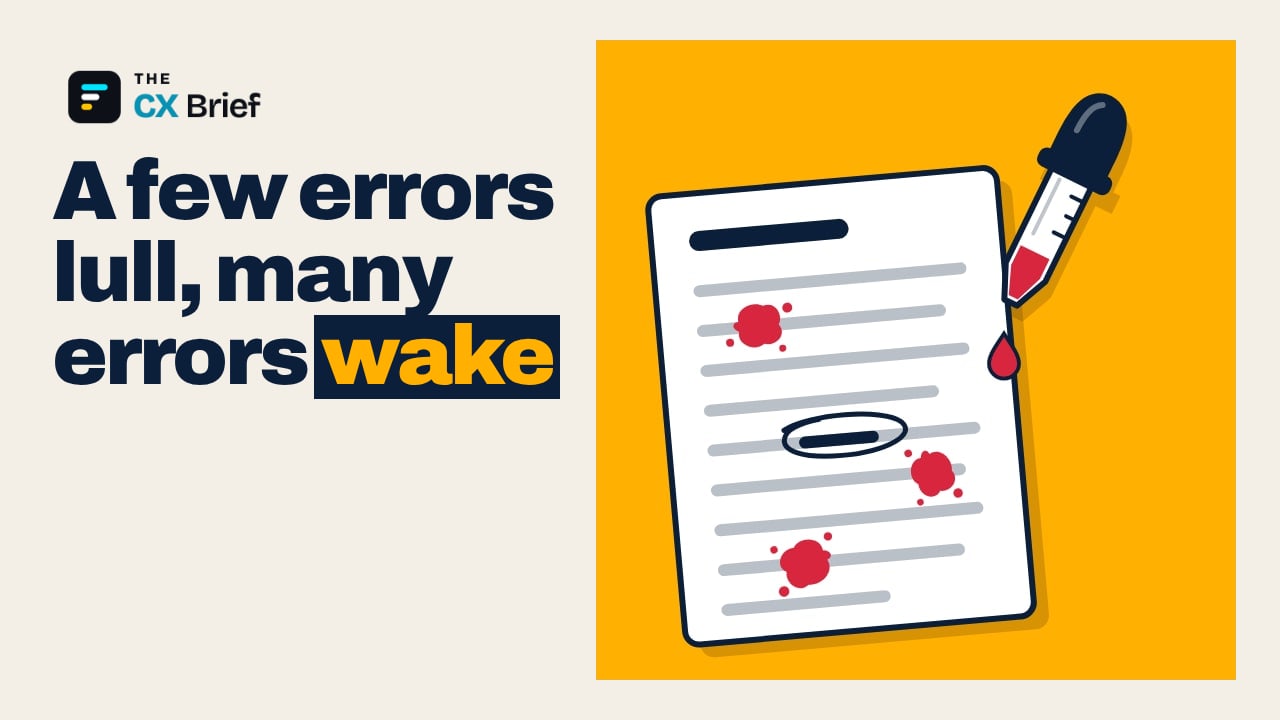
In an experiment with 17 pharmacy students, adding three errors to each summary raised the share of real errors caught from about 24% to 31%; adding only a few errors lowered it.
What's happening
A new study by the Harvard Business School AI Institute tested a simple question: Does deliberately planting errors in AI-generated text keep the person reviewing it alert? The experiment ran for 12 weeks with 17 pharmacy students. When no errors were added, participants caught about 24% of real errors. When a few errors were added, that rate fell to about 20%; when many were added, it rose to about 31%. The groups given medium and high doses of planted errors spent about 16% and 18% more time, respectively, on each review.
Whose desk it lands on
The manager responsible for checking AI output. Is your team actually reading what the AI writes, or just signing off on it, and can you measure which?
Our view
The CX Brief's interpretation, not a claim made by the source.
Having a review step in a process does not mean the review actually happens. In this experiment, what sharpened attention was not the presence of errors but their dose: a few errors made reviewers lax, while many made them sharper. No team can know the right dose without testing it in its own work.
Source
Source:Harvard Business School AI Institute
Reported by: Harvard Business School AI Institute·October 15, 2026
Go to source →