Arizona Iced Tea's 33-Year CX Lesson
What a 99-cent can and its 33-year promise teach brands in Türkiye, and the most important question we need to answer.
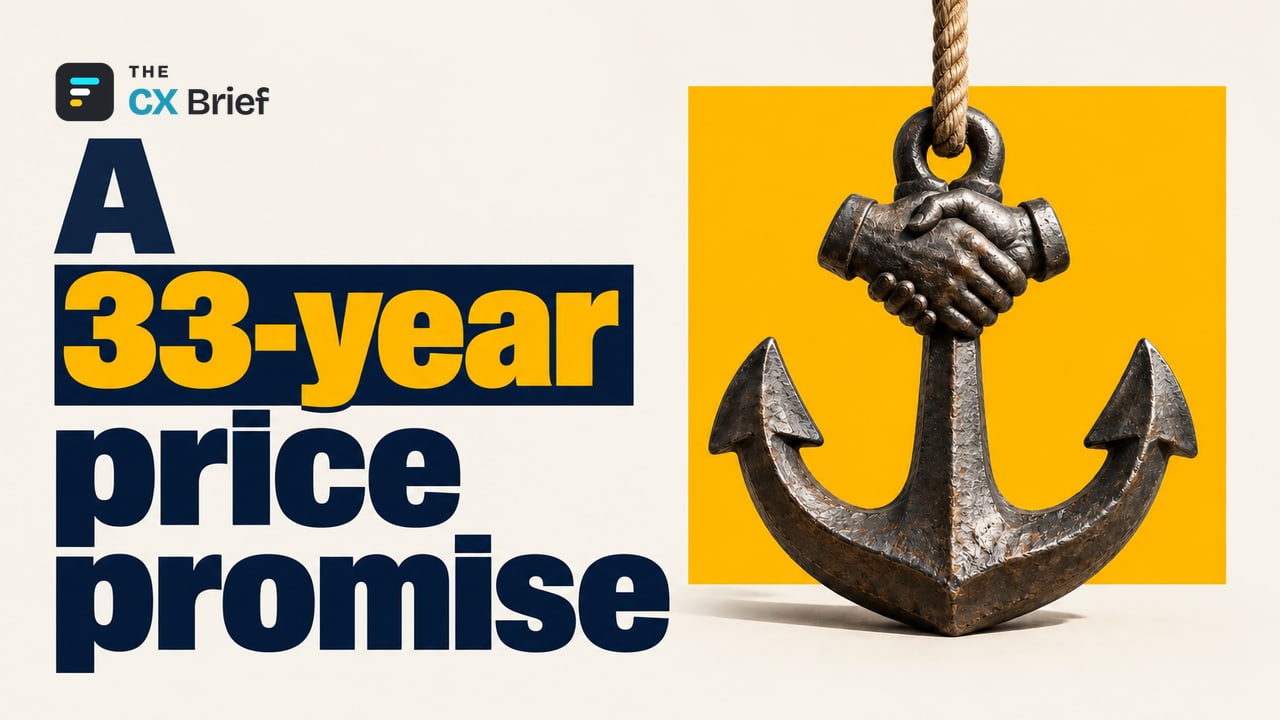
As we all know, inflation is practically one of the family: we sit down at a café and can’t tell whether the menu prices are good for the month or only for the week. For us, price tags that stay put are the stuff of science fiction, yet across the ocean a mind-boggling strategy keeps ticking along like clockwork: for roughly thirty-three years (yes, 33), the same figure has appeared, stubbornly and insistently, on a beverage can: 99 cents.
Arizona Iced Tea has barely touched this price since it hit the market in 1992. Neither global waves of inflation, nor raw material crises, nor the trade wars that have broken out in recent years could knock the brand off course. The company’s founder, Don Vultaggio, even went on NBC’s Today Show and proudly repeated the same promise once more. I admit all of this feels just a little strange to us.
You have probably already thought of Costco’s famous $1.50 hot dog combo. It’s a fair association; both draw on the same stubborn customer promise. But there is a reason we are putting Arizona under the microscope: here we are talking not about the loyalty playbook of a giant retail chain, but about a “promise” that a single product has shouldered alone for more than thirty years. And in 2025, that promise faced the most serious test in its history.
The Challenges of Sustaining the Strategy
To understand why Vultaggio clings to this number like a sacred relic, we need to rewind the clock a little. As the story goes, shortly after Arizona hit the market, the collapse of the Soviet Union upended the aluminum market and the company was forced to raise the price of a can above one dollar. The result? Sales plummeted. That day, Vultaggio made a personal vow and brought the price back down to 99 cents. According to company sources, from 1996 onward the number was also printed directly on the can. Ever since, this price tag has been an inseparable part of the design, and probably the brand’s most valuable “trust” anchor.
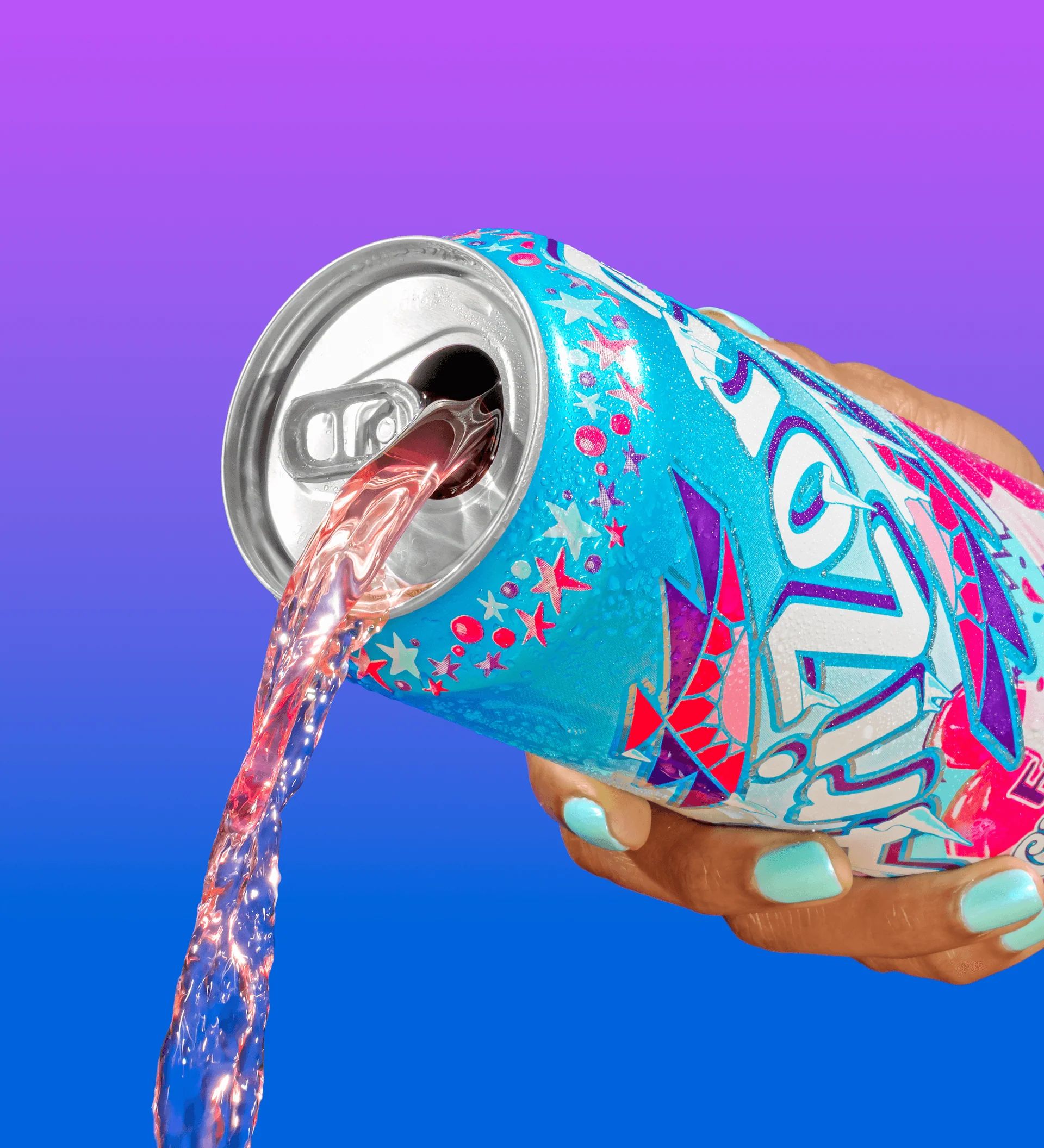
So how do they pull it off? As CX professionals, we all know that the price of protecting a smooth customer experience out front is paid in the operational hell behind the scenes. The 99 cents on the Arizona can didn’t change, but the production line’s speed rose from 150 cans a minute to as many as 1,500. The aluminum lids were made thinner, and trucks often hit the road at night to cut shipping costs. Their move in early 2023 shows this agility even more clearly: to protect the iconic can’s 99-cent price, they raised the price of the 20-ounce plastic bottle in their portfolio from $1 to $1.25 in the US Northeast and used that bottle to cross-subsidize the can. Behind the scenes, enormous operational flexibility is at work to protect that “one number” customers hold on to.
Where the Peak-End Rule Meets the Hot Dog
The logic of not passing costs on to customers, whatever it takes, also shows up in the hot dog and drink combo that Costco has sold for $1.50 since 1985. Co-founder Jim Sinegal reportedly always described this price as “the last good taste the customer is left with on the way out of the store.”
That line is Daniel Kahneman’s famous Peak-End Rule, a theory we all know well, put into practice. Customers remember an experience not by every moment from start to finish, but by its most intense moment (the peak) and how it ended (the end). The $1.50 hot dog served to customers right after the physical and psychological (actually, more emotional 😄) pain of the checkout is a machine built precisely to turn that “end” moment into a positive one. To protect that “end” moment, Costco also made enormous behind-the-scenes moves, such as building its own hot dog plant and switching beverage suppliers. Both brands know full well that if the contract between you and the customer has been boiled down to a single number, everything around that number can flex, but never the number itself.
Packaging as a Word-of-Mouth Vehicle
Arizona’s second bit of madness is that it spends next to nothing on traditional marketing. No Super Bowl ads, no influencer campaigns, no splashy newsletters. The brand positions its pastel-toned design bearing the 99-cent mark as a word-of-mouth marketing engine that practically sells itself. The customer experience itself has become the brand’s main marketing strategy.
So does it work? According to YouGov’s BrandIndex data, Arizona holds a very strong position on “value perception,” just behind Lipton. While rivals Snapple and Nestea are losing ground on this measure, Arizona keeps growing, driven above all by that magic 99-cent label and the word-of-mouth urban legend that “these guys never raise the price.” Organic growth that doesn’t rely on traditional advertising may create a great word-of-mouth tailwind among millennials, but steering this far clear of traditional communication channels is a huge risk the brand has knowingly taken on.
The Big Test: Trump Tariffs and Canadian Aluminum
Yet in 2025, this 33-year-old fortress came under serious siege. A chain of events that began when tariffs on aluminum imports soared in the summer of 2025 turned cost pressure into a final boss. That NBC interview I mentioned revealed another tragicomic dimension, one reaching all the way to Canada, where I myself live: it turns out that roughly 20% of Arizona’s massive aluminum needs came from Canada! When huge tariffs suddenly landed on one of the biggest suppliers of a brand that consumes more than 45 million kilograms of aluminum a year, its costs went straight through the roof.
In fact, we are no strangers to the CX fallout of these tariff crises. In my piece The Wall Diplomatic Crises Couldn’t Breach: Customer Loyalty (the English version of which was published on CustomerThink as an editor’s pick), I examined in detail how smoothly Costco weathered a similar Canada-US diplomatic crisis. In 2025, Arizona faced a similar test of resilience. We are watching the same scenario play out again: brands like Costco and Arizona know very well that changing that number isn’t just about fixing a profit margin; it means wiping out, in one stroke, the “brand trust” customers have invested in for years. To keep the experience intact, they quietly pay the price on the balance sheet through shrinking margins.
Through a Turkish Lens: A Question for CX Leaders
Now let’s be frank: it would be laughable for a brand in Türkiye to come out and say, “We’ve frozen our price for 30 years (forget months; even weeks would be doubtful).” But the real lesson Arizona offers us lies not in price but in CX philosophy.
Every brand must decide what to put at the core of the value proposition it builds with its customers. It doesn’t always have to be price; it could be product quality, an unconditional return guarantee or the promises of a loyalty program. Secretly bending these promises in a crisis, quietly reducing product weights (shrinkflation) or changing the value of loyalty points in the middle of the night is nothing but an insult to the customer’s intelligence.
As LoyaltyLion’s latest Customer Loyalty Report showed very clearly, when uncertainty rises, consumers seek emotional shelter in the brands they feel safest with. In a country like Türkiye, where insecurity and economic stress run high, the premium attached to being “the brand that keeps its word” is, if you ask me, far higher than in the rest of the world.
If we gather as a CX team and ask, “What is the one thing our brand will never change, no matter the crisis?” and can’t come up with a clear answer, then the actions we take when crisis comes knocking will be left entirely to the panic of the moment.
“Question of the week:
What is the one thing our brand will never change — no matter the crisis?” —
The 99 cents on Arizona’s can is less a price than a giant CX sign that says “We’re here and we keep our word.” You can’t buy customer loyalty; you can only earn it through consistent experiences. That leaves just one question: Is your brand truly ready to identify the one promise it will declare “untouchable,” whatever the cost?
Update note (October 14, 2026): When this article was moved to The CX Brief, documented corrections to facts and attributions were made, along with spelling corrections; the article’s content and views are unchanged.
This piece was first published in Turkish in CX Bulletin on July 18, 2026. English translation.