The Strategic Chasm: Executives' Blind Spots and Seamless Transformation (Part 3)
With 80% of executives seeing customer experience as a growth engine, why does only one in five organizations have a real roadmap? Cracking the code of transformation with the Capgemini report.

One of the tragedies of modern business is the vast gap between the glossy success slides projected onto giant screens in the sleek meeting rooms of corporate towers and the deep frustration everyday consumers experience on their phones. While corporations celebrate systems that run flawlessly inside their own echo chambers, the reality outside is tuned to an entirely different frequency. In the final installment of our three-part series on Capgemini’s “Reimagining Customer Experience” report, I draw on data straight from the field to confront the fatal chasm between vision and execution and leaders’ biggest blind spots.
The Illusion of Perfection and Broken Roadmaps
Most of us have run into one major misconception: mistaking intent for strategy. Data from the Capgemini Research Institute confirms this observation with brutal arithmetic. More than 80% of executives identify customer experience as one of the key drivers of their growth strategies. On paper, everything looks great. But when it comes to putting this vision into practice, the picture suddenly darkens. Globally, only 20% of organizations have a unified, holistic strategy and roadmap that covers the customer journey end to end.
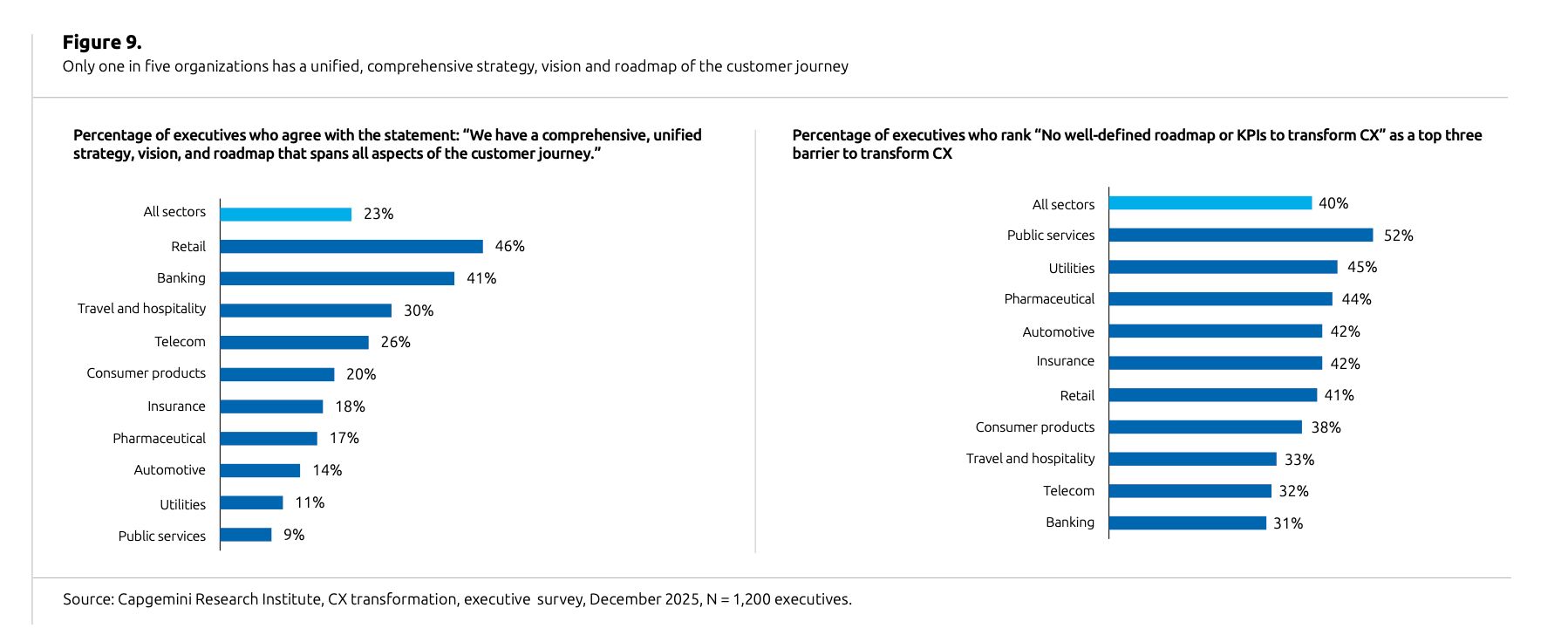
Source: Capgemini Research Institute 2026
Everyone else — the vast majority — is trying to get by on the disjointed efforts of departments trapped in silos. Fragmented customer journeys now stand out as the biggest barrier to delivering seamless service. While one department tries to speed up the process with AI agents, another is still bogging the customer down in manual approvals. Consumers deal not with a single, unified brand but with a string of departments that don’t talk to one another. This fragmentation multiplies the burden frontline employees carry, which I detailed in the second part of our series, and shakes trust in the brand to its foundations.
The Metric Trap: Targets Disconnected From Real Results
Another major blind spot for executives is the measurement fallacy. The Capgemini report makes it very clear that, across sectors, customer feedback is not being turned into tangible business results such as sales or revenue growth. Companies pour enormous effort into raising survey scores, but those metrics are completely disconnected from the value the customer creates in the real world. If a system is built solely to improve the metrics it produces, it doesn’t reflect reality; it simply plays the optimistic tune executives want to hear.
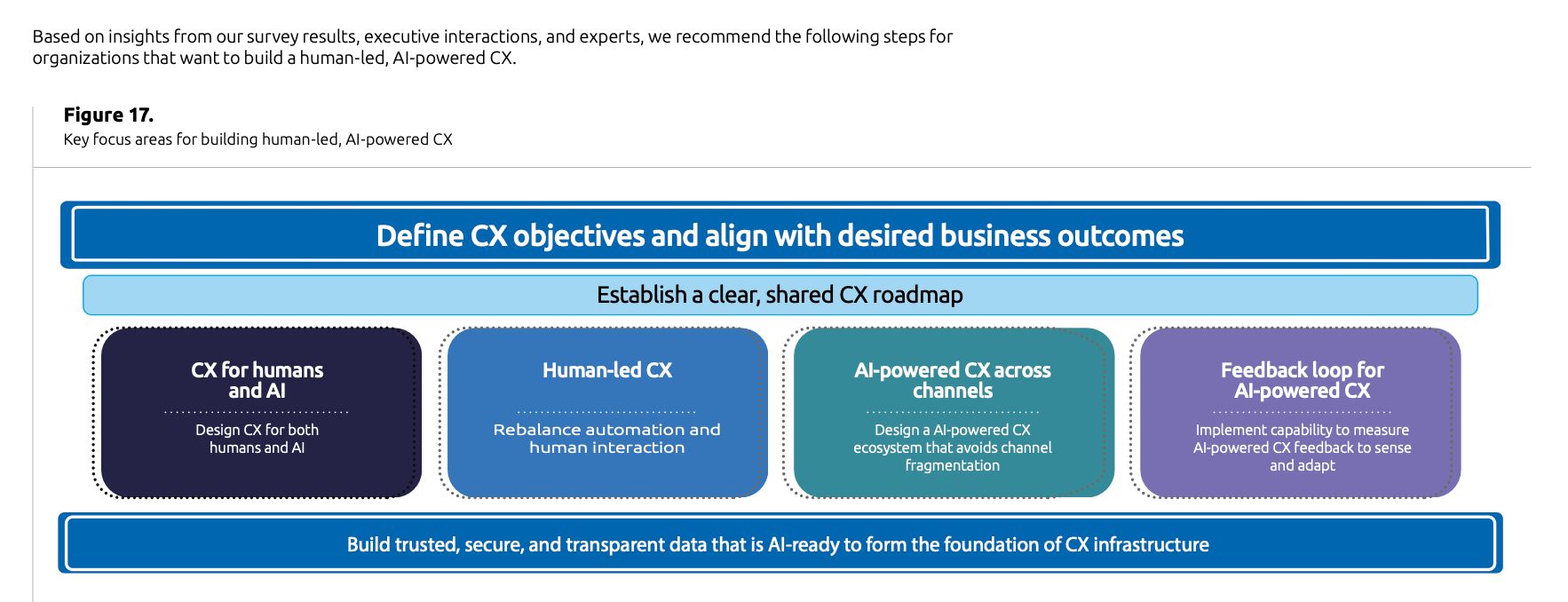
Source: Capgemini Research Institute 2026
To chart a new course for transformation, we have to build an architecture that puts people, not technology, at the center and makes technology serve them. We should use agentic AI tools to break down silos and build a seamless data bridge spanning the customer journey from start to finish. In the process, however, autonomous systems should be positioned not as cold mechanisms that fill the gap people leave behind, but as spotlights that illuminate executives’ blind spots in the field. The only way to close strategic chasms is to free technology investments from boardroom optimism and test them against the lived reality of the street, the customer and the frontline employee.
This piece was first published in Turkish in CX Bulletin on April 23, 2026. English translation.