The Algorithm of the Human Touch: The Trust Paradox and the Front Line (Part 2)
While 80% of consumers worry about data security, companies are deaf to their outcry. Drawing on Capgemini's 2026 report, we examine how humans and AI work together in customer experience.
As invisible digital networks weave through every moment of our daily lives, we are all, in fact, party to a silent bargain. On one side stand the dizzying speed and the comfort of personalization that algorithms offer us; on the other, our deepest fear: concern for our privacy. And the two are colliding. As I continue examining the Capgemini Research Institute’s eye-opening “Reimagining Customer Experience” report, one of the most startling findings to emerge pinpoints exactly where this bargain breaks down. In this second act of the three-part series, I take a hard look at the vast security gap that brands ignore behind closed doors and at the new alliance between AI and the heroes in the field: frontline employees.
Companies’ Biggest Blind Spot: The Illusion of Security
At many technology summits today, I hear leaders boasting about the massive data structures that show how well they know their customers. Yet consumers are telling a very different story. According to Capgemini’s global research, more than 80% of consumers rank data security as their biggest source of concern. The tragic part, as the same research reveals, is that organizations all but “ignore” this enormous concern when setting their strategic priorities.
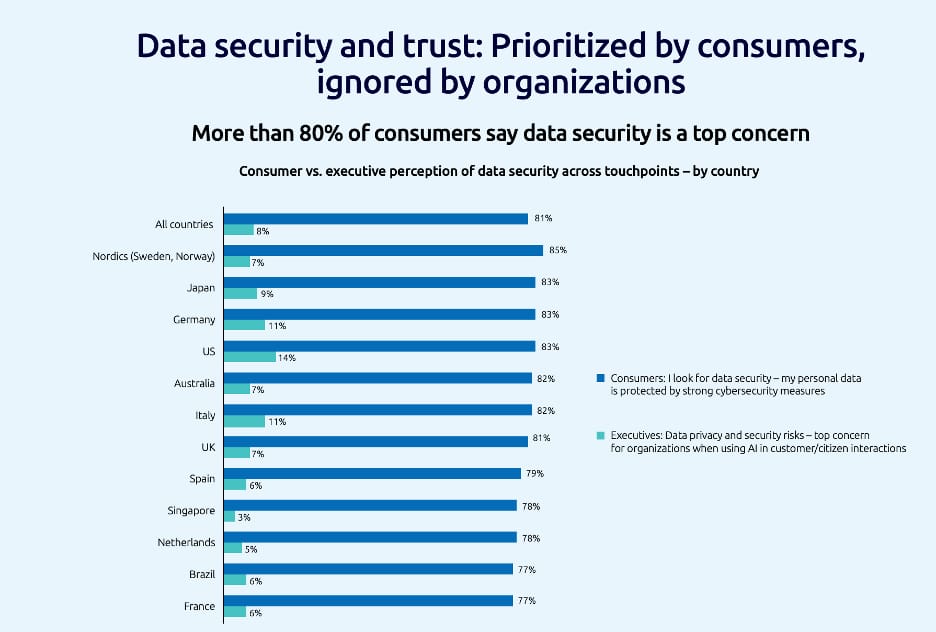
Source: Capgemini Research Institute 2026
Concluding that customers trust a brand unconditionally because they are ready to hand routine purchases over to AI agents (a topic we covered in detail in the first article in the series) is a fatal strategic mistake. Consumers want convenience, but they are terrified of their data being bought and sold like a product or exposed for all to see in a data breach. No brand that fails to put data transparency at the center of its operations can buy long-term loyalty, no matter how advanced its algorithms are.
The Front Line’s New Comrade-in-Arms
So where do “people” stand in an age of such intense automation? Contrary to the dystopias in which technology takes over everything, the data whispers that the human factor has never been more valued. Especially in a crisis, with a complex complaint or when emotions run high, consumers look not for a cold interface but for a flesh-and-blood human being who can empathize.
This is exactly where AI stops being a rival that replaces people and becomes the most powerful amplifier of their capabilities. The Capgemini report projects that, across all sectors, more than 90% of frontline employees will use generative AI daily to improve the customer journey within the next two years. What’s more, 87% of executives say AI-generated summaries and recommendations add more value to the customer experience by boosting frontline employees’ productivity.
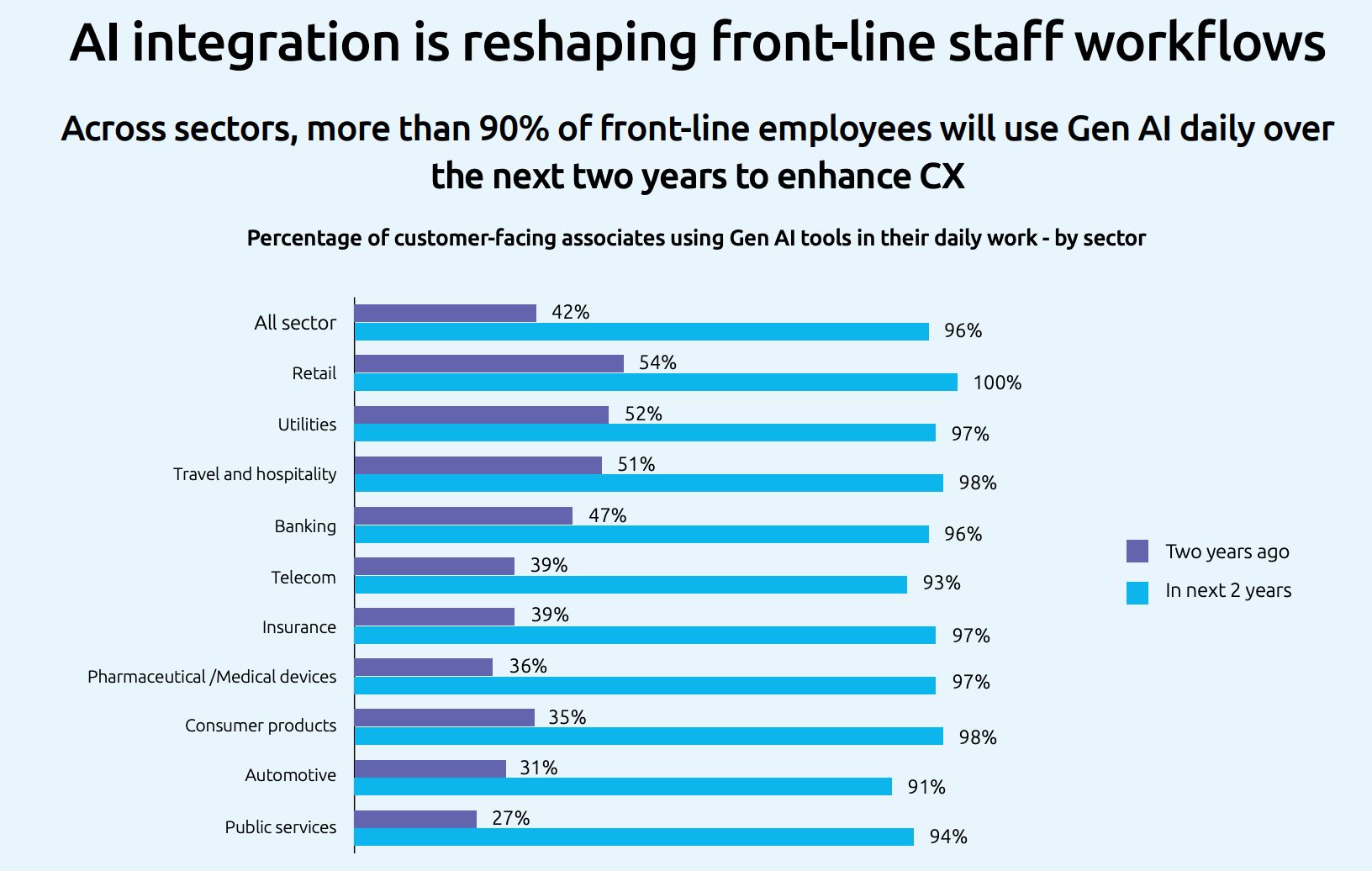
Source: Capgemini Research Institute 2026
By lifting that enormous, tedious data burden off the shoulders of professionals in the field, AI gives them the gift of the “time” and “mental space” they need to look customers in the eye and build a real connection. As I discussed in this article, no matter how flawless the tools are, if you cannot preserve the motivation and initiative of the people using them, technology amounts to nothing more than money down the drain.
In short, algorithms can show us the way, but it will always be people who take customers by the hand and walk that path with them. In the third and final part of this special series, I’ll draw on striking data to examine the great delusion of executives who refuse to face this reality, and the massive blind spot we call the “Strategic Chasm.”
This piece was first published in Turkish in CX Bulletin on April 22, 2026. English translation.