How to Calculate ROI on Customer Experience Investments: Strategic Ways to Win Over Senior Leadership
Walking into a board meeting armed only with the argument that "our customers love us" is like offering nothing but your good intentions as collateral for a business loan. Unfortunately, neither one puts cash in the register.
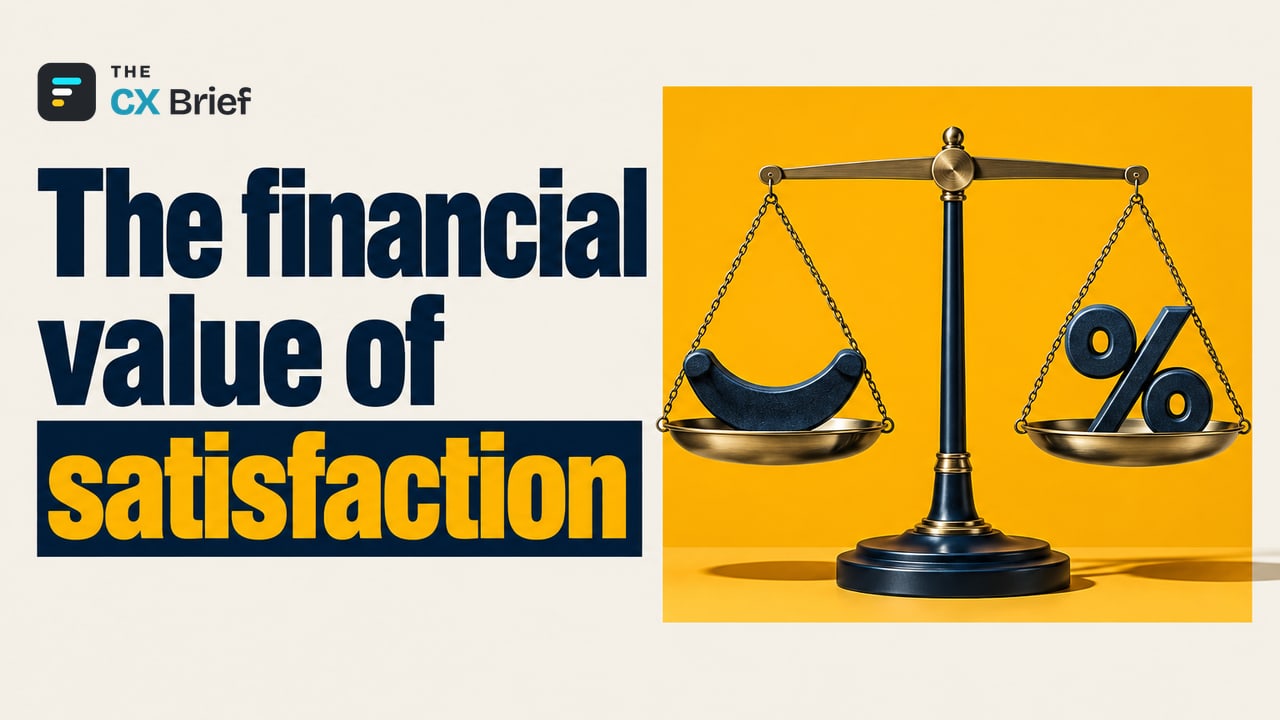
Walking into a board meeting armed only with the argument that “our customers love us” is like offering nothing but your good intentions as collateral for a business loan. Unfortunately, neither one puts cash in the register.
In today’s hypercompetitive markets, a large majority of CEOs see customer experience and AI as the most critical levers for transforming business results. But a great deal gets lost in translation between the front line and the boardroom. While most organizations try to measure frontline success solely through survey scores or system adoption rates, the board wants to see how these investments show up on the balance sheet, in hard numbers.
The truth is that visionary organizations that get this focus right grow far faster than their competitors. According to Forrester data, customer-obsessed companies grow revenue 41% faster than their peers and profits 49% faster. These figures send a very clear message: a well-designed strategy is never a cost center; it’s the company’s most powerful value center. The only way to win over senior leadership is to flawlessly translate the emotions we hold so dear into the financial language they understand.
Financial Returns on Investment: Three Core Pillars
Experience investments are not seeds of goodwill scattered to the wind; they fuel the company through three main financial mechanisms that contribute directly to shareholder value. Stock market analyses by the financial research firm Watermark Consulting, based on Wall Street data, prove that over an 18-year period, customer experience leaders delivered 7.8 times greater total returns to their shareholders than competitors with weak customer experience. So where exactly does all this value come from?
The first and most obvious pillar is revenue growth. A flawlessly designed customer journey shows up as a jump in sales conversion rates and greater cross-selling success. A happy customer doesn’t just come back; they arrive at the checkout with a fuller basket.
The second pillar is cost reduction. Frictionless service design lets customers solve their own problems with AI and self-service tools, driving down the operational cost of service at an incredible pace. As the Sprint example reported in Harvard Business Review shows, focusing on improving the experience can cut a business’s cost to serve customers by as much as 33%.
The third pillar, and the most profitable in the long run, is undoubtedly retention. A lower churn rate sends customer lifetime value through the roof and secures the company’s future cash flow.
Critical Metrics That Speak Senior Leadership’s Language
Algorithms are now the beating heart of modern return on investment. If you want to prove the strategic value of your planned technology and process investments to C-level executives, you need to come to the table with metrics translated clearly into financial terms:
-
Sales Conversion Rate: The real-time guidance that AI-powered assistants give your sales teams delivers tangible revenue growth within weeks through higher sales conversion rates. Using A/B tests to report this impact to management is a powerful weapon.
-
Average Labor Cost (Experience Compression): Thanks to smart algorithms, a less experienced employee can handle complex processes like an expert. This optimizes the organization’s payroll costs without compromising service quality.
-
Time to Value: Speeds up cash flow by shortening time to market for new products.
-
Collection Effectiveness Index: Shortens the time it takes to resolve invoice exceptions by increasing the share of transactions that need no manual intervention.
-
Employee Net Promoter Score (eNPS): Teams using modern tools that make their jobs easier become more engaged, and the costs of losing talent fall. (If you haven’t read our article What Do 2026 Employee Trends Tell Us?, be sure to take a look.)
The Touchpoint Fallacy: Missing the Forest for the Trees
The big trap companies most often fall into is taking a siloed approach — focusing only on isolated touchpoints instead of taking a wide-angle view of the journey.
Your call center may be working brilliantly, and your agent’s courtesy may have earned a very high satisfaction score on that particular call. But McKinsey’s iconic, time-tested analysis “From Touchpoints to Journeys” confronts us with a bitter truth: even if the likelihood of things going well at each of an organization’s individual touchpoints is above 90%, average satisfaction across the customer journey, from start to finish, can fall to around 40%. The real financial loss and erosion of loyalty happen in the gaps between departments that each run perfectly on their own, in the dark moments when the customer is left alone.
A Roadmap and Action Plan That Win Over Stakeholders
Winning buy-in for your strategy at the very top starts with uniting around a shared vision. Like Disney, you should set a simple goal that aligns with the brand’s value proposition and inspires belief among employees. Draw on the power of behavioral psychology to build design choices that have an outsized effect on perception — such as ending processes on a positive note — into your operations.
When supplying the board with data, let your organizational maturity set the pace. Start by establishing a baseline with core indicators such as NPS or CSAT. As your program grows, focus on customer effort scores to pinpoint friction in processes, and once you reach maturity, make your case entirely with in-depth financial analyses such as customer lifetime value (CLV).
The experience you create isn’t just a heartwarming feeling; it’s concrete math, right there on the balance sheet. Once you manage to translate those feelings flawlessly into cold, hard numbers, you’ll get those budgets signed off much faster than you think.
This piece was first published in Turkish in CX Bulletin on March 23, 2026. English translation.