The "Michelin" Star Era of Voice Assistants
In the world of customer service, we've spent years trying to strike a delicate balance: empathy or speed? But one thing is certain: the frustration level of a customer lost in an IVR maze can rival that of Gordon Ramsay spotting a burnt risotto.
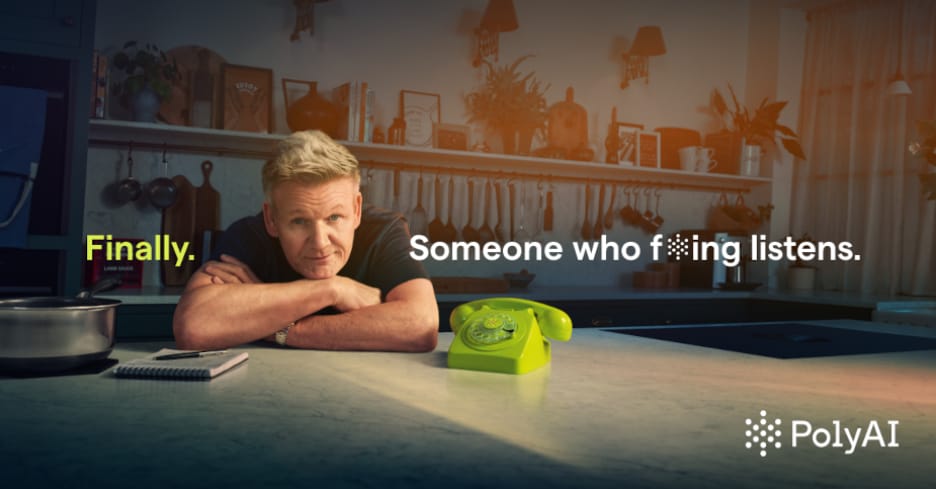
This is exactly where PolyAI, which develops enterprise voice assistant technology, has made a bold move. And it did so with the world’s pickiest, most impatient man: Gordon Ramsay.
The campaign’s message is clear: “Finally, someone who really listens.”
What’s Cooking in the Kitchen?
In its new ad series, PolyAI cast Gordon Ramsay not merely as the “face of the brand” but as a “Chief Tester” who pushes the technology to its limits. With that familiar fiery temper, Ramsay calls a restaurant to book a table. First up is an old-school touch-tone system: it interrupts, fails to understand and makes Ramsay say the same thing over and over.
It’s that “I didn’t catch that, please repeat” loop we all know. Then PolyAI’s assistant steps in and everything changes. The AI on the other end responds so naturally, so fluently and so “calmly” that even Ramsay is left stunned.
The Gordon Ramsay & PolyAI Commercial
YouTube: Finally. Someone who f*ing listens.
Watching the ad, you get a very clever answer to the question running through all our minds: “What would happen if I called?” You may have noticed that as Ramsay lays into the system, the voice on the other end doesn’t give mechanical answers the way old-school robots do. It understands context, responds instantly and completes the task smoothly. That fluency dispels the customer’s “I’m talking to a robot” bias and lets them focus solely on the solution itself.
PolyAI is actually issuing a quiet but very bold challenge here. Brands usually show “happy paths” in their tech demos. PolyAI, by contrast, set the bar at the very top: the world’s least tolerant customer. The subtext is crystal clear: “If we can solve the problem without driving even Ramsay mad or setting off that famous meltdown, we’ll be there for you in your most stressful moments, too.”
And at the end of the day, what calmed the chef down wasn’t the assistant’s artificial politeness but its speed. No hold music, no needless confirmation phrases. Perhaps our idea of luxury in next-generation customer experience is changing: we no longer want to sit through long, deferential rounds of “you’re right”; we want the problem to vanish seamlessly within seconds. Even Ramsay couldn’t say “No” to that.
What Does This Mean for the Turkish Market?
Now to our part of the world… Türkiye is a market where call center traffic and emotional tension both run very high. People here hate the “touch-tone menu,” are impatient and keep hitting zero to reach a “human” right away and explain their problem.
This technology holds great promise for Turkish companies: the goal is no longer to “answer the phone” but to make the person on the other end feel understood (even if it’s by a robot). Your customer may be stuck in Istanbul traffic, shouting angrily, but if your AI solves the problem with “Yes, Chef!” discipline, that customer will stay loyal.
This piece was first published in Turkish in CX Bulletin on February 14, 2026. English translation.