Human-Led, AI-Powered Transformation (Part 1): The Age of Agents and Consumer Reality
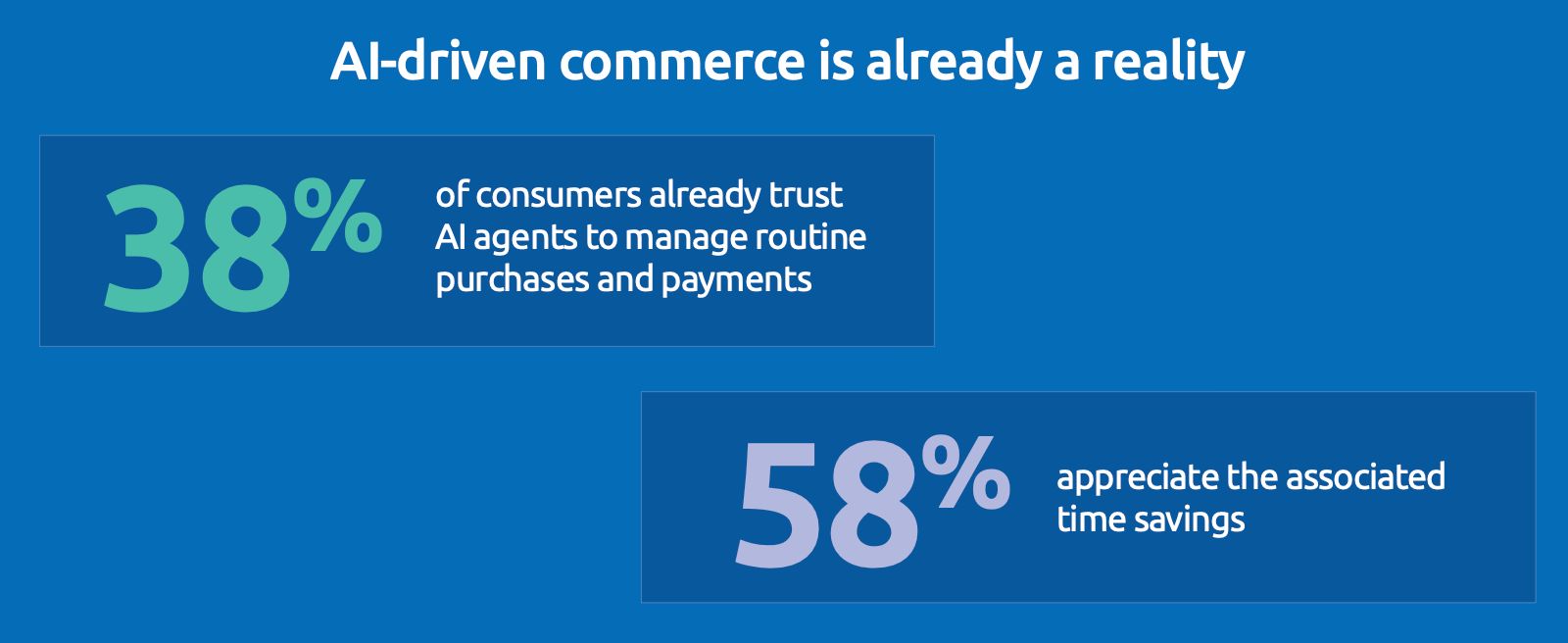
According to Capgemini's recent report, 38% of consumers trust AI agents enough to hand over their routine shopping and payments. Explore the agentic AI revolution through an expert's eyes.

I have an incredibly rich research report in front of me. It is packed with so many wonderful details that trying to squeeze it all into a single piece would be a cardinal sin. So, for the first time on CX Bulletin, I’m writing a series. As luck would have it, that honor fell to this Capgemini report. ☺️
In a career spanning more than twenty-five years, I have rarely witnessed another period in which consumer behavior changed so radically and so quietly. Spending hours scrolling through screens, adding products to a cart or exchanging long messages with customer service is becoming a thing of the past. The Capgemini Research Institute’s “Reimagining Customer Experience: Human-led, AI-powered” report proves in hard numbers exactly how we have crossed this threshold.
Our first stop: the new bond consumers are forming with autonomous agents, and the revolution threatening the reign of search engines.
Handing Routine Tasks to Agents
AI is no longer just an assistant; it is stepping up to become an “agent” that makes decisions and carries out transactions on the consumer’s behalf. Capgemini’s global research reveals that 38% of consumers trust AI agents to manage routine purchases and payments on their behalf. What’s more, 58% of respondents say they value the time savings this technology gives them.
Source: Capgemini Research Institute 2026
Consumers are more than ready to hand control over to AI, not only to save time but also to lighten their cognitive load. But look across the table at the brands, and the picture is not nearly as encouraging. Only one in five organizations has deployed such agentic AI capabilities for customer journeys. Consumers are running while organizations are still learning to walk, which once again confirms the strategic inertia problem I highlighted earlier when examining why AI investments in customer operations have not delivered the expected results. In the period ahead, the biggest competitive disadvantage will be trying to serve the autonomous consumer with manual operations.
The End of SEO and the Coming GEO Revolution
The way consumers are weaving AI agents so deeply into their purchase decisions is also demolishing the most fundamental rule of digital marketing. Search engine optimization (SEO), which has long determined brands’ digital visibility, is rapidly giving way to generative engine optimization (GEO). It’s no longer just about ranking high in search results; it’s about being encoded in AI algorithms’ datasets as a trustworthy source worth recommending. Managing the perception of an autonomous agent that shops on your customer’s behalf is impossible with traditional SEO playbooks.
Source: Capgemini Research Institute 2026
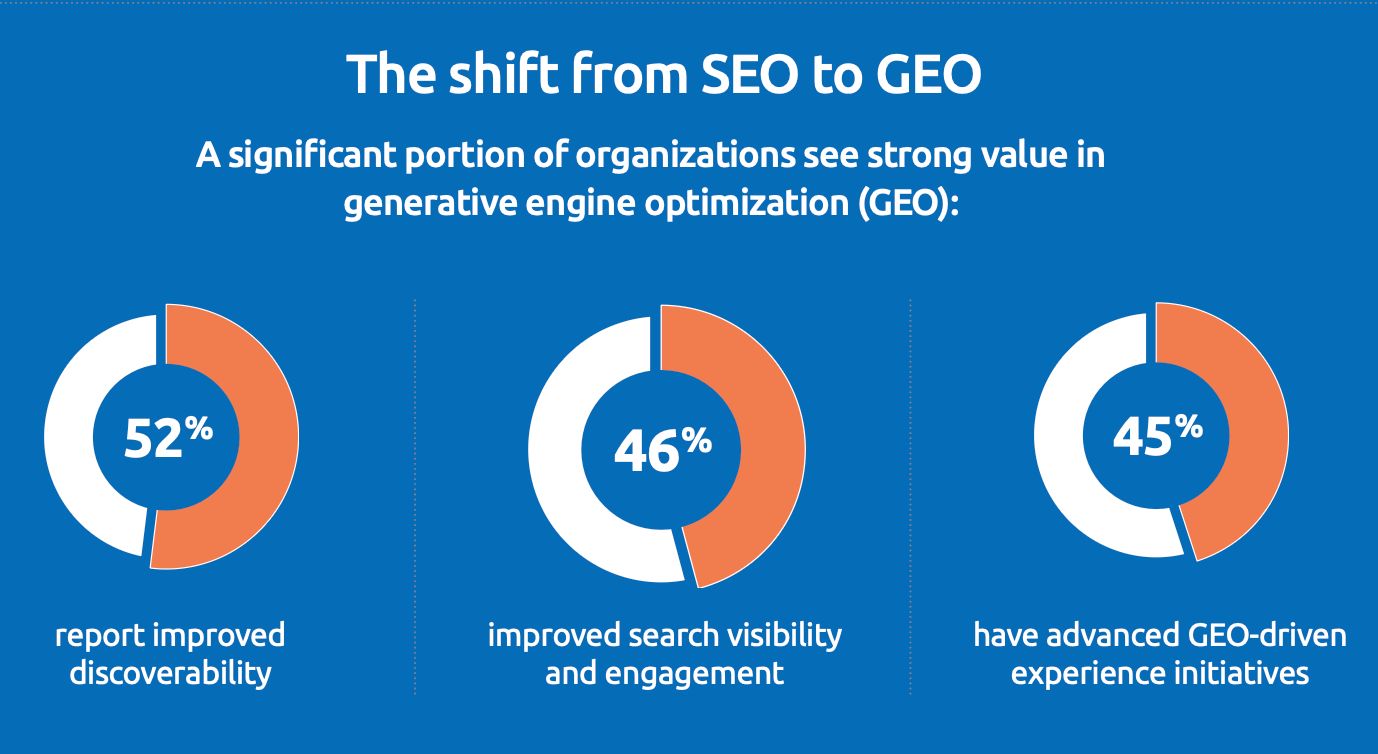
Capgemini’s data shows that a significant share of organizations are seeing strong value from GEO: 52% say their discoverability has increased and 46% report improved search visibility and engagement, while 45% have advanced GEO-focused experience initiatives. You have to design your content strategy not only for human readers but also for the AI language models that crawl, interpret and synthesize your content. The agentic AI era is rewriting the rules, and, as always, those who make the first move will dominate the market.
In the second part of our series, we will look at how this tremendous technological leap is transforming frontline teams, and at the data security paradox — the biggest fear for 80% of consumers.
This piece was first published in Turkish in CX Bulletin on April 21, 2026. English translation.