Bridging the AI Divide in Customer Service and Building Trust
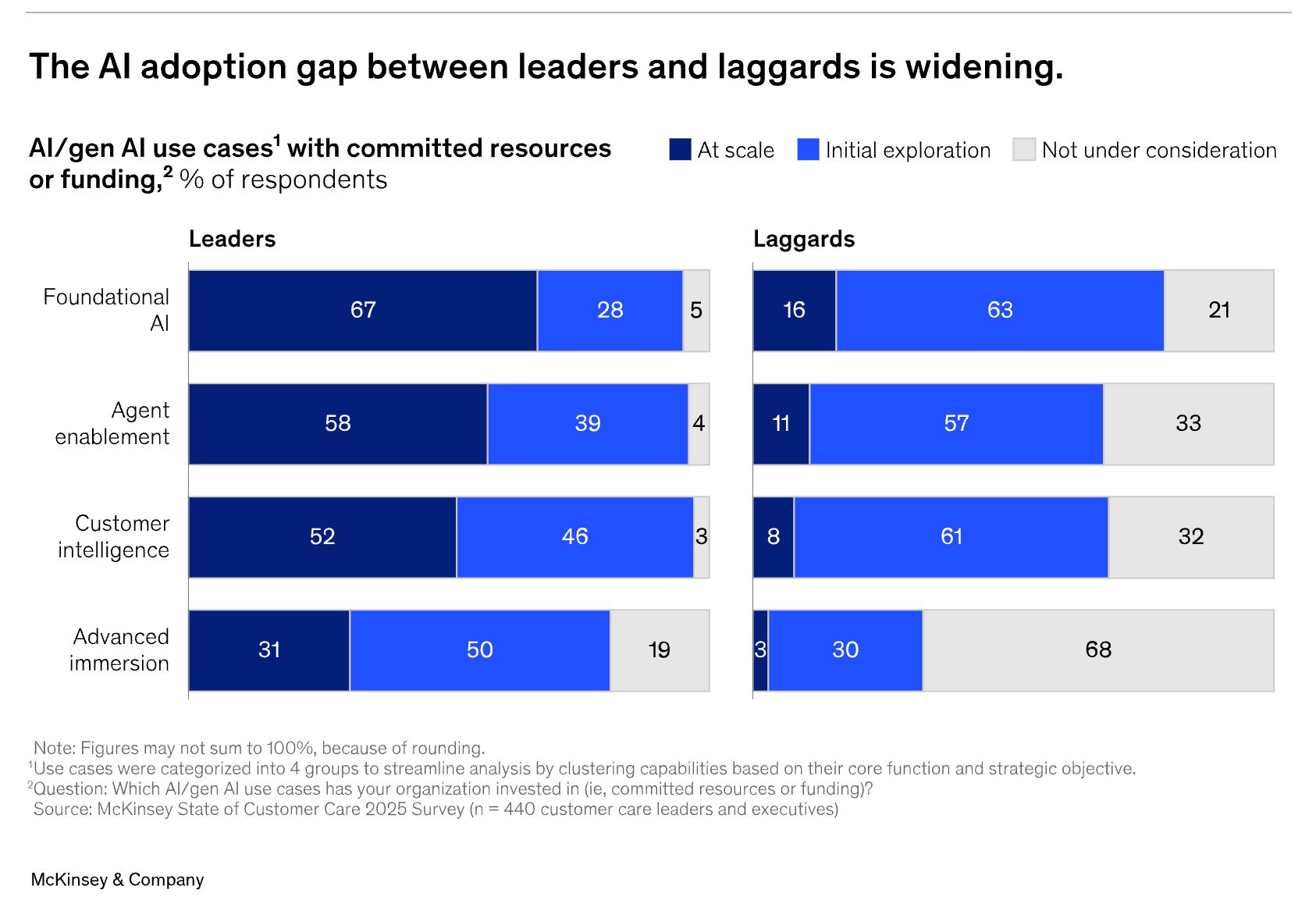
In customer service, we are seeing a huge and ever-widening divide between leading companies and laggards when it comes to adopting AI.

The latest research McKinsey published just a few days ago proves that autonomous AI agents are turning customer service from a mere cost center into a strategic force that drives growth and loyalty. Leading companies are pulling well ahead in the market by treating AI not merely as a cost-cutting tool but as an opportunity to improve the customer experience and grow revenue.
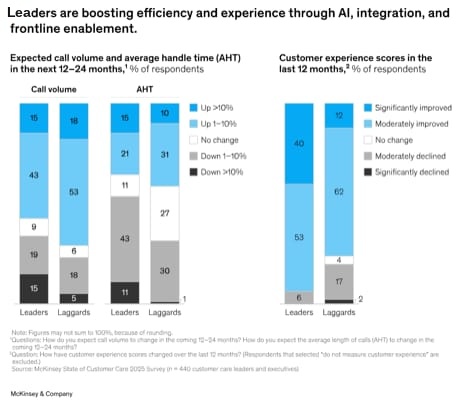
The secret of this transformation lies not just in adding a piece of technology but in completely rethinking ways of working and the role of people. Rather than simply bolting the technology onto existing systems, organizations that redesign their processes from scratch see a return on their investment much faster. According to the research, a substantial 40% of leaders report a marked improvement in customer experience scores over the past 12 months, compared with just 12% of laggards.
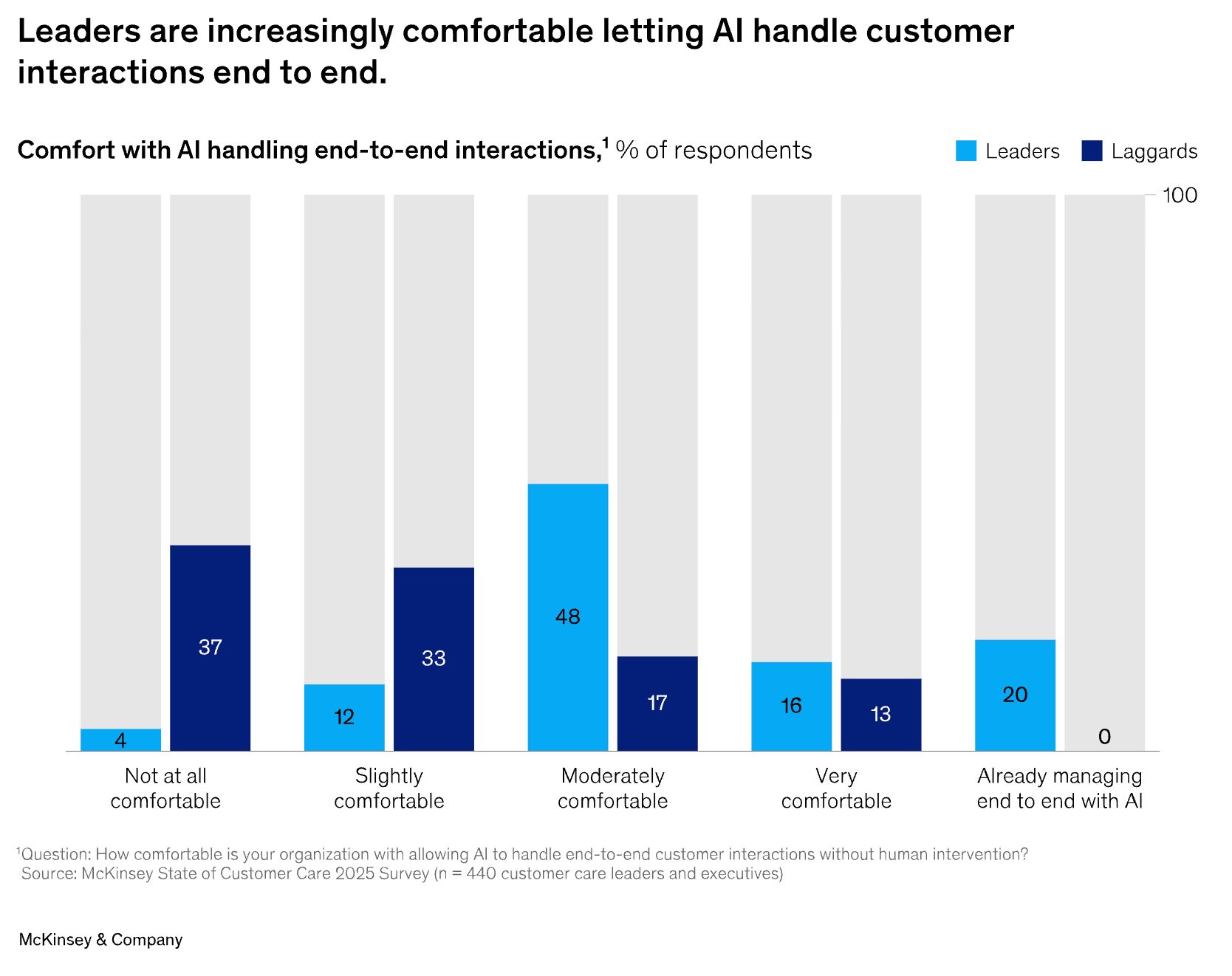
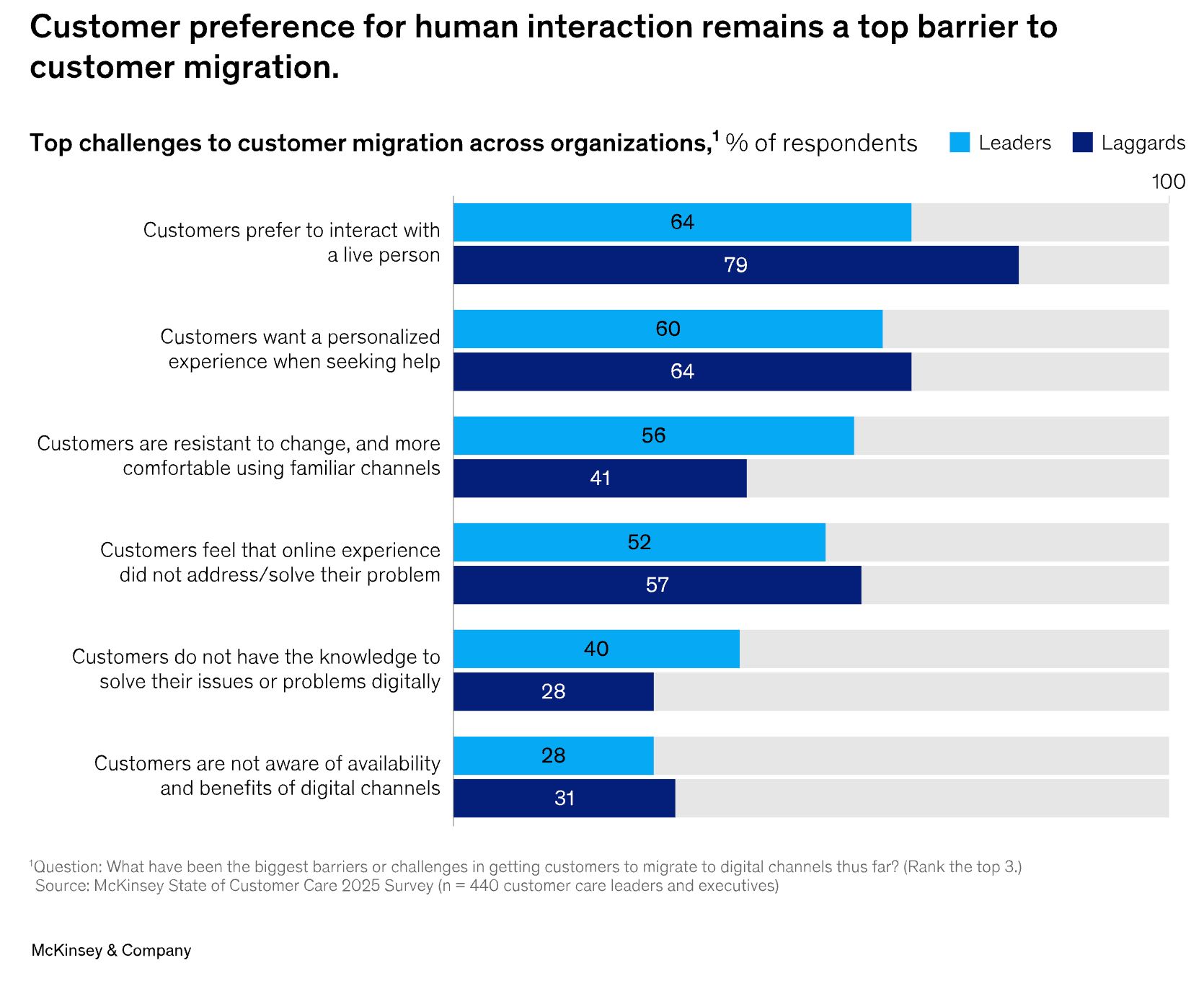
However advanced the technical capabilities, the real key to success is building trust. The leadership team’s vision, employees’ adoption of these new systems and, most important, customers’ trust in autonomous assistants are all essential. The data backs this up: a sizable 37% of laggards say they are not at all comfortable with AI managing customer interactions end to end, while among leaders that figure drops to just 4%. Yet customers’ continued preference for talking to a human when things go wrong remains a significant barrier to overcome. Indeed, an overwhelming 79% of laggards and 64% of leaders see customers’ desire to communicate with a live human as one of the main challenges in moving them to digital channels.
In light of all this data, it is very clear that the customer service model of the future will take a hybrid form built on collaboration between people and AI. As AI takes over a large share of standard interactions and frees up capacity, human agents will focus on complex situations that require empathy and deep trust. Success calls not for months of theoretical planning but for analyzing the core reasons customers get in touch, moving to rapid implementations that deliver results within weeks, and putting human values at the center when scaling up. In the age of AI, the real competitive advantage comes not just from having more technology, but from designing how work, decisions and trust will evolve together.
This piece was first published in Turkish in CX Bulletin on February 27, 2026. English translation.