Amazon's New AI Health Assistant: 4 Key Features That Are Fundamentally Changing the Patient Experience
Have you ever felt lost trying to make sense of a complicated lab result, or struggling to explain those results to a doctor who isn't your usual one? Amazon's One Medical service aims to put an end to this fragmentation.

Having our medical information scattered across different doctors and clinics is one of the most common complaints about the healthcare system. This is where Amazon’s One Medical service comes in, rolling out a new AI-powered “Health Assistant” designed to end that fragmentation and simplify the process. This technology goes far beyond being a tool that merely provides information. In this article, we’ll take a close look at the four most surprising and impactful aspects of this new assistant, each with the potential to transform the patient experience.
1. It’s Not Just a Chatbot; It’s an Agentic “Assistant”
Many of today’s health apps let you enter your symptoms and get general information about possible causes. But Amazon One Medical’s AI assistant is much more than a passive source of information; it’s an agentic helper that takes action on your behalf.
We’ve compiled some of the actions the assistant can take:
- Identifying the Ideal Care Path: By analyzing your health data, it helps you determine the care option that suits you best—a virtual visit, an in-person appointment or urgent care.
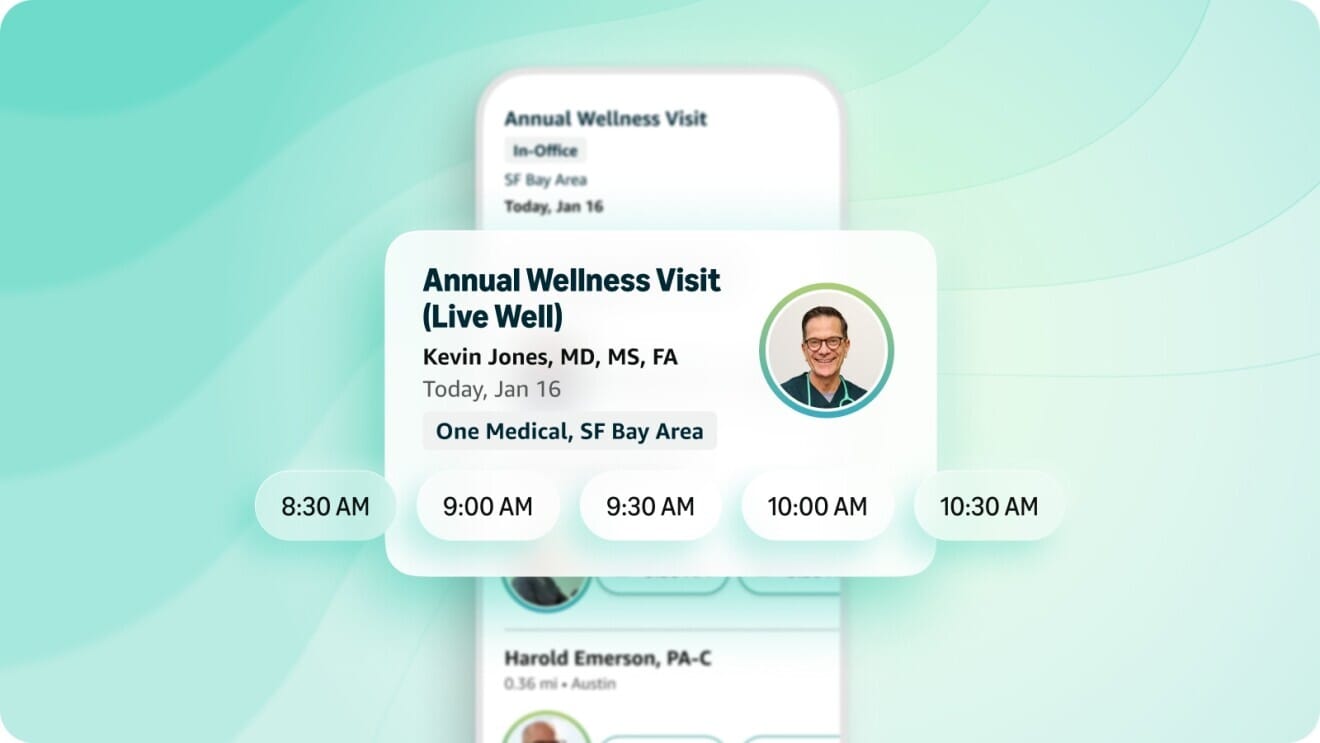
- Scheduling Appointments: Once it has identified the care option best suited to your health situation, it can book an appointment for you with your One Medical doctor.
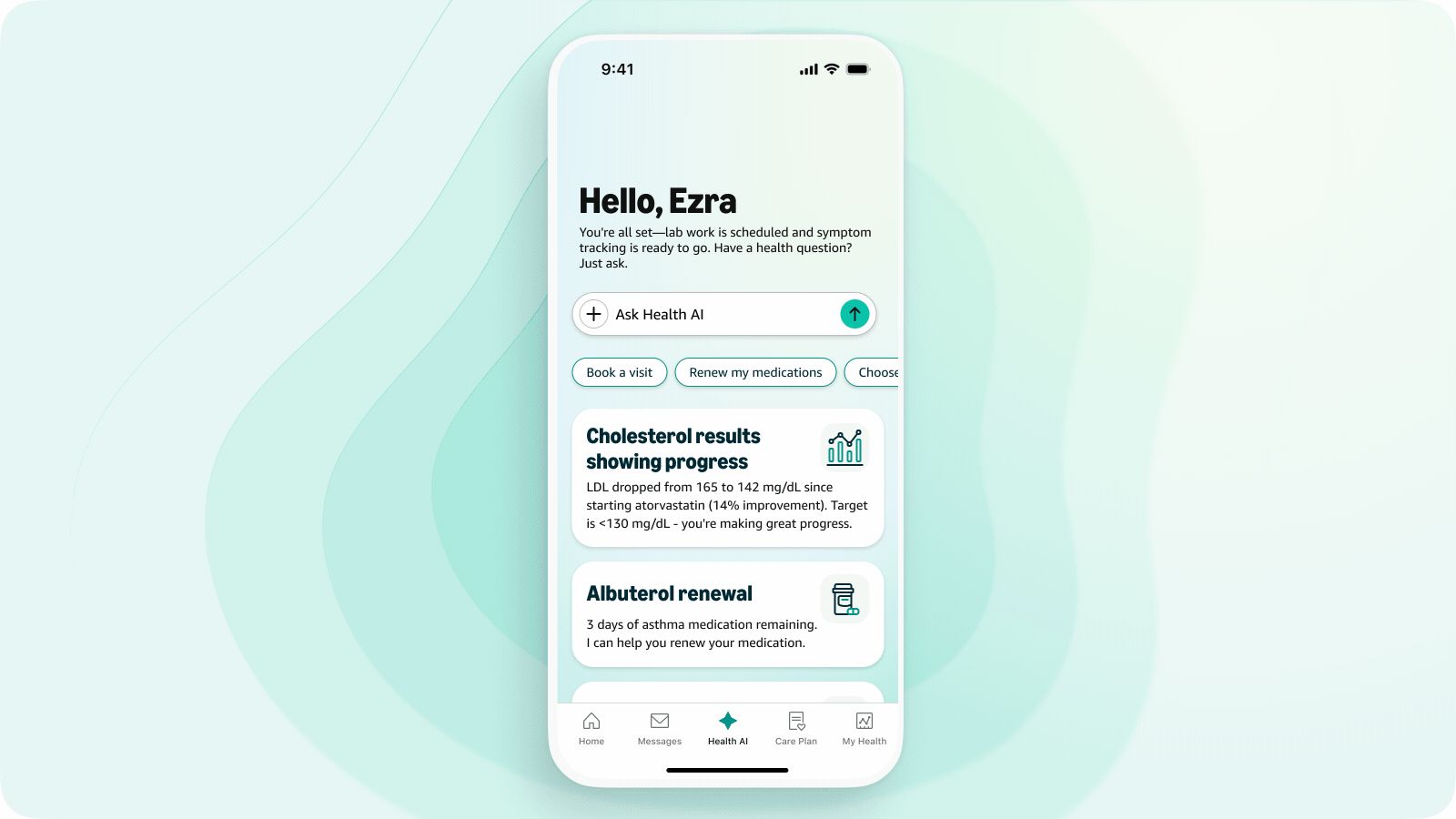
- Medication Management: It simplifies routine tasks such as requesting refills for your current medications and, if you wish, gives you the option to fill your renewed prescriptions directly through Amazon’s pharmacy service.
This ability to “take action” turns patients from passive recipients of information into active managers of their own health journey, and it eliminates the administrative burden, one of the biggest friction points in healthcare.
2. Talk to Your Medical Records: The Age of Hyper-Personalization
Perhaps the most revolutionary feature of this AI assistant is that it can access your entire medical history to offer you personalized guidance. While generic health tools give everyone the same standard information, the One Medical assistant can generate answers specific to you by taking into account your lab results, past health problems, vaccinations and current medications.
As Neil Lindsay, senior vice president of Amazon Health Services, has noted, this approach offers a direct solution to one of the biggest problems in healthcare: fragmented information.
Personalization at this level isn’t just a feature that makes life easier; it amounts to a remedy for fragmented processes. By bringing all of the patient’s scattered data together into a single, coherent layer of intelligence, it enables people to understand their own health far more deeply and to make better-informed decisions.
3. It Doesn’t Replace Your Doctor; It Empowers Them
One of the first worries that comes to mind with AI is whether it will replace human interaction, and especially the doctor-patient relationship. One Medical states clearly that it designed this technology “to complement, not replace” this valuable relationship.
In the words of Dr. Andrew Diamond, One Medical’s chief medical officer:
Even as AI capabilities expand, the patient-doctor relationship built over time remains critically important and irreplaceable.
In a field like healthcare, where the stakes are high and trust is hard-won, building a bridge that empowers the doctor, rather than a fully autonomous system, is a far smarter long-term approach to user adoption. By striking a balance between technology and human needs, it aims to maximize trust.
4. Privacy Is a Core Feature
Health data is extremely sensitive, and a data-driven company like Amazon entering this space naturally raises questions about privacy. Aware of these concerns, One Medical says it built privacy and security into the system as core components. The company is taking a proactive and transparent stance on the issue.
Amazon One Medical’s Health Assistant is not just a technological innovation; it also represents a philosophy aimed at fundamentally improving the patient experience. Its role as an active helper, its hyper-personalization based on your medical history, the way it strengthens the doctor-patient relationship and its treatment of privacy as a priority from the very start are what set it apart from ordinary health apps.
As Amazon’s move turns personal health management from a provider responsibility into a consumer technology standard, how will we balance the privacy of our data against the benefits of personalized care in the future?
This piece was first published in Turkish in CX Bulletin on January 23, 2026. English translation.