83% Believe in AI, 6% Can Use It: The 2026 Retail Report and Türkiye
The 2026 Connected Retail Experience Study, prepared by Incisiv in collaboration with Verizon Business and Cisco, puts numbers on the gulf separating retail's personalization and AI goals from the operational reality on the ground.

Retail is crossing a historic threshold. The “2026 Connected Retail Experience Study,” prepared by Incisiv in collaboration with Verizon Business and Cisco, puts hard numbers on the gulf at the heart of this transition. The research lays bare three key fault lines in global retail: the widening gap between ambition and reality in personalization, the struggle to move from talk to execution in AI, and the redefined role of store staff. This vast gap between the industry’s vision and the operational reality on the ground calls for strategies to be rewritten.
Personalization: Everyone Wants It, No One Pulls It Off
Source: Incisiv, 2026 Connected Retail Experience Study (in collaboration with Verizon Business and Cisco)
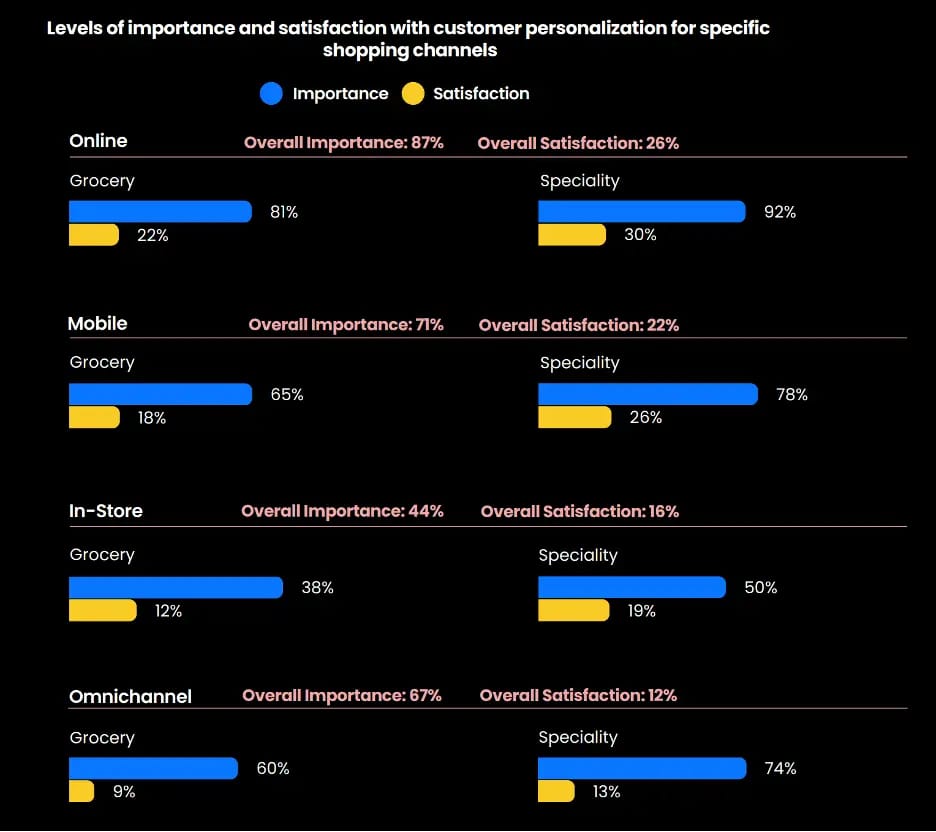
One of the study’s starkest findings shows up in the personalization data. Customers expect a seamless flow between physical stores and digital platforms, yet in omnichannel personalization there is a full 55-point gap between importance and satisfaction. While 67% of retailers consider omnichannel personalization important, satisfaction in this area stands at just 12%.
Source: Incisiv, 2026 Connected Retail Experience Study (in collaboration with Verizon Business and Cisco)
This gap cannot close without unifying data across channels. As the report states plainly, siloed data and disconnected systems are the biggest obstacle to a consistent, personalized experience. As we have often stressed in the retail and technology analyses we publish at CX Bulletin, no matter how advanced technology becomes, the foundation that makes personalization meaningful still rests on the ability to understand people and context.
AI: Belief Is Universal, Execution Is Rare
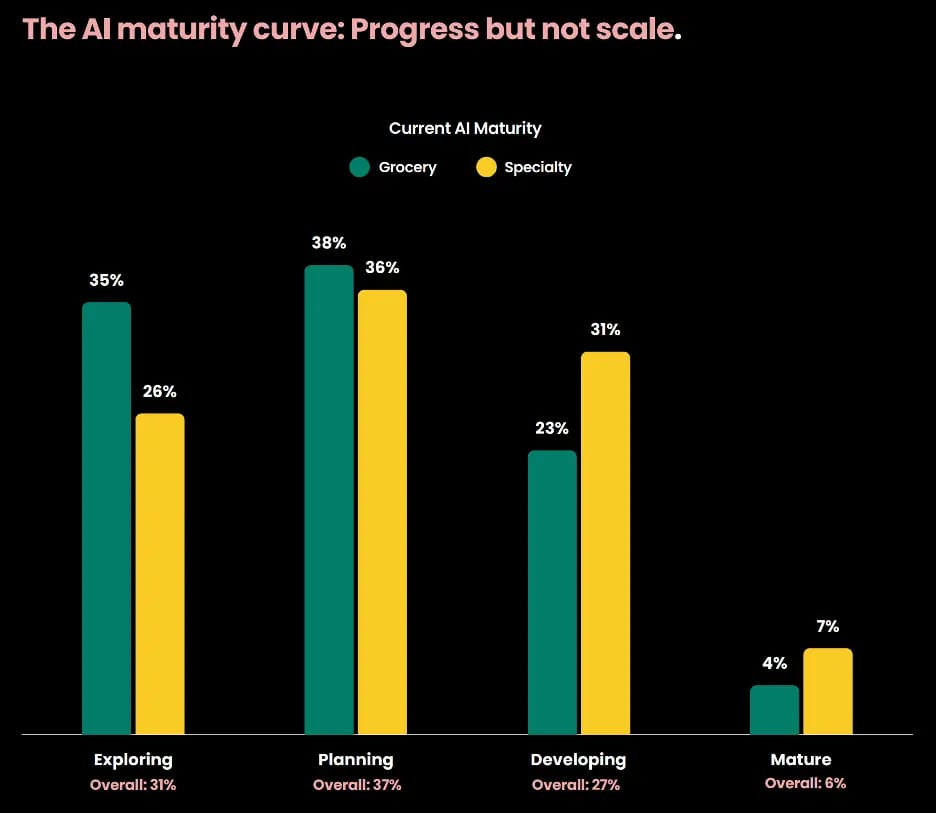
There isn’t a meeting room left in the industry where AI isn’t on the table. While 83% of retailers say AI is essential to compete, only 6% consider their current implementation mature. Three main obstacles clearly stand in the way of turning all this enthusiasm into operational success: siloed or poor-quality data (55%), system integration challenges (48%) and a shortage of skilled talent (44%).
Source: Incisiv, 2026 Connected Retail Experience Study (in collaboration with Verizon Business and Cisco)
As detailed in McKinsey’s October 2025 report titled “The Agentic Commerce Opportunity,” AI agents that take over decision-making on behalf of retail customers promise trillions of dollars in economic value. But on this very point, the study is unequivocal: “AI maturity is not about algorithms; it’s about being ready to change how decisions are made.” The tool is ready, but the organization isn’t ready for it yet.
AI use priorities diverge sharply by segment. Grocery and supermarket retailers are investing mainly in inventory management (49%) and loss prevention (43%) — figures that include both live deployments and pilots — while fashion and department store retailers are focusing on personalized product recommendations (53%) and customer behavior analytics (47%). The business model directly sets the AI agenda.
Staff Are Being Armed with Data… But Slowly
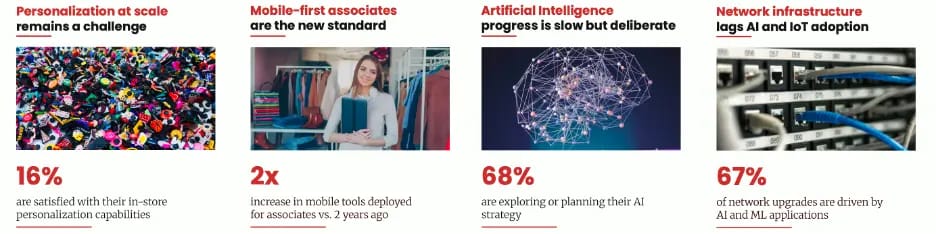
Although technology investments are usually discussed in terms of their consumer-facing side, in physical spaces people are the real architects of the customer experience. Over the past two years, the use of mobile tools by store associates has doubled. In the grocery and supermarket segment, 67% of executives point to “finding and retaining staff” as their biggest operational challenge.
As noted in ContactPigeon’s analysis of Sephora’s omnichannel strategy, which redefined customer experience in beauty, striking a balance between digital innovation and the physical store experience depends on supporting staff with technology. Yet the 2026 Incisiv study shows that mobile access to real-time data is still lagging. Only 26% of specialty retailers and just 16% of the grocery/supermarket segment give their staff mobile access to customer data; within two years, these figures are expected to rise only to 56% and 40%, respectively. In other words, a store associate talking face to face with a customer usually can’t look up that customer’s history or preferences.
The Infrastructure Impasse: Networks Under Heavy Load
The report’s section on network infrastructure holds another critical data point that should shake up retailers’ agendas. Retailers are no longer upgrading their networks just for efficiency. The number-one driver of network infrastructure upgrades, at 67%, is AI and machine learning applications.
More importantly, only 39% of companies are satisfied with their systems’ “edge computing” support. When in-store network performance falls short, the price is steep: 61% of the retailers in the study report losing revenue directly because of slow or unreliable digital experiences. Even if you build an excellent mobile app or set up cashierless checkout, your investment goes completely to waste if your in-store network infrastructure can’t support it. Yet while companies devote all their attention and budgets to building this hardware infrastructure, they are dangerously sidelining the most vital part of the equation: listening to the voice of the customer.
Conclusion
This research offers an unvarnished account of the transition retail is now in the thick of. Although belief in AI is universal, the data infrastructure and execution capabilities needed to make it real are missing for the vast majority. What’s more, in an era of digital transformation like this one, “providing customer insight” has sunk to near the bottom of the priorities guiding store strategy, at 12%. Yet it is precisely now that deep customer insight is needed to make AI and algorithms work.
We have to reframe the question: we should stop asking “Should we use AI?” and start asking “Which customer problem will we solve, based on which data, and how will we measure it?”
So what are your thoughts on closing this vast gap between the AI vision and the reality on the ground? If you email me about how you are managing the growing pains of this transformation in the corporate world and how you see the opportunities in the industry, I would love to read your thoughts, build new professional connections and have eye-opening career conversations.
This piece was first published in Turkish in CX Bulletin on April 6, 2026. English translation.