Why Is It Risky to Tie Customer Experience Metrics to Employee Bonuses?
Why is it dangerous to link customer experience metrics to employee bonuses? Survey pressure in the auto industry, Goodhart’s Law and a healthier model for measuring CX.
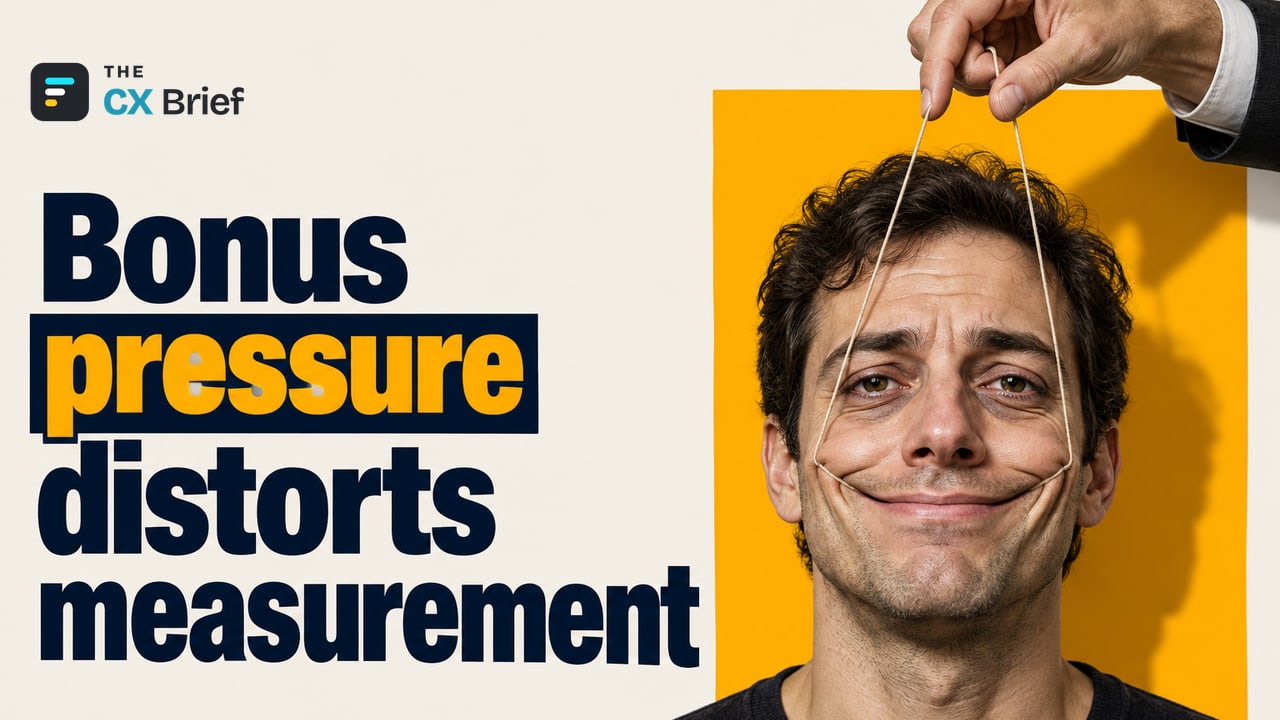
Almost 20 years ago, I was about to buy a brand-new car for the first time. And because I had picked a sporty German car, I was twice as excited. I waited impatiently for the day I would take delivery. I clearly remember one line I heard at delivery: “They’re going to call you for a survey. If you don’t specifically use the word ‘excellent’ about the service you got, they’ll cut my bonus. They’ll have you key in a score between 0 and 9 on the phone; enter 9 for that too, or I’m toast.” I couldn’t help getting flustered. The last thing I wanted was to mess with the livelihood of the salesperson who had looked after me so well. To be ready for the survey call, I rehearsed my lines over and over, and once they’d called, I let the salesperson know right away. Mission accomplished!
Over the years, I’ve owned cars from other brands. The one thing that never, ever changed, whether I was buying or bringing the car in for routine maintenance: “…you’ll be getting a survey…”
Last year, we moved to Canada as a family. One of the first things on the list was buying a car. That deserves an article of its own, but running into sales reps who didn’t inspire confidence and who made add-on packages like paint protection mandatory just to close the sale made us feel, for a moment, as if we were back home.
On the day we took delivery, they all but forced us to write a five-star Google review. We got the survey talk, too. Even though we had asked for a test drive and that request was never met, we were also on the receiving end of the brazen instruction that “you must answer yes to the test drive question in the survey.” We even filled out the survey together 😊 I couldn’t help myself: ignoring all my spouse’s raised eyebrows and pointed looks — call it an occupational hazard — I started explaining that this really wasn’t right or ethical. It fell to me to break the uncomfortable silence: “Come on, let’s fill out this survey” 😊
Then I did something my spouse didn’t know about and will probably learn about only by reading these lines: I wrote to the headquarters(!) of the South Korean maker of the car I had bought, told them their Canadian operation had a feedback mechanism that “conditions the customer,” explained the downsides and said they might want to look into it. The reply was even more dramatic: they said they could forward my complaint(!) to the dealership in question.🥲
The real experience lost in the chase for scores
That’s why, in last week’s piece, “Starbucks’ New Bonus System: The ‘Training the Customer’ Trap in Customer Experience,” I couldn’t resist bringing up the auto industry. And when that piece brought in emails from our CX Bulletin members, I decided to explore the topic a little further:
According to Edmunds, a CarMax company, at many dealerships a score of 8 or 9 can count for next to nothing as far as the employee is concerned; at some manufacturers, these scores can affect dealer bonuses, inventory-related benefits and employee income. The Los Angeles Times also wrote that customer surveys can, over time, drift into a system that produces — I’m quoting it verbatim to preserve the meaning — “bad data, awkward interactions, nervous employees and coached responses.” And Canadian auto industry publications state openly that customer satisfaction surveys have often become more about the score than about feedback, that high scores and comments can contradict each other, and that the industry has sometimes slid from listening to feedback into managing the score. (So this isn’t just my personal experience…)
What does Goodhart’s Law tell us?
Data quality
The moment a measurement hits employees’ wallets, it’s no longer just a measurement; it changes behavior, too. Goodhart’s Law puts this very clearly: when a measure becomes a target, it ceases to be a good measure. CNA’s analysis of Goodhart’s Law likewise says that measurements tied to rewards create an incentive to manipulate, and can sometimes push the performance indicator up while lowering the system’s actual effectiveness. In other words, a metric that shows green on the dashboard doesn’t necessarily mean things are improving on the ground.
Survey answers aren’t neutral data to begin with
Pew Research highlights the risk of “social desirability bias” in surveys: because people want to be accepted and liked, they may give the answer that seems more socially appropriate rather than the true one. When customers believe their answer will affect the bonus or the job of the service advisor in front of them (just as in my example), that pressure grows even stronger. The survey then stops being a tool for measuring the experience and becomes a tool for managing the relationship.
Honest feedback gets punished
Once employees start asking customers for high scores, the organization naturally begins to see negative feedback as a threat. At that point, the organization’s reflex isn’t to learn but to protect the score. The same issue comes up in commentary from Canada’s auto industry: surveys are increasingly focused on the “score” rather than “feedback,” and verbatim comments often tell a different story from the scores. This creates organizational blindness, especially among frontline teams in service, dealerships, retail and contact centers.
Confusing loyalty with satisfaction
J.D. Power data shows that high service satisfaction is strongly linked to return visits and intent to repurchase. That matters. But that doesn’t mean we should say, “Then let’s tie employee pay directly to survey scores.” Satisfaction and loyalty are linked, yes; but the same link doesn’t hold between a manipulated satisfaction score and real loyalty. PwC’s 2025 customer experience survey also reveals a serious perception gap between executives and customers: while about 90% of executives say loyalty has increased, only 40% of consumers agree. It is precisely this gap that raises the risk of inflated metrics turning into an organizational blind spot.
The real issue: not customer experience, but measurement design
Here’s the message that needs to get across: rewarding employees isn’t wrong. In fact, in most industries it’s necessary. The problem is which behavior you reward.
The system breaks down when you send employees this message: “If the customer gives you a high score, you win.” From that moment on, improving the customer experience and steering the customer toward the right answer start to look like the same thing in the employee’s mind. If your goal really is to find out what your customers think and to improve, stay well away from this.
The healthier message is this: “You create the right experience; we’ll judge it not by a single survey score but through a more balanced performance framework.”
For a quick fix, the starting point is clear: X-data shows how people feel; O-data shows what happened operationally. Real progress begins when you can read the two together. The system should be designed not for the “metric” but for “action.”
So what should organizations do?
Let me share the magic formula right away: Culture change. This is the perfect moment to give a nod to Peter Drucker:
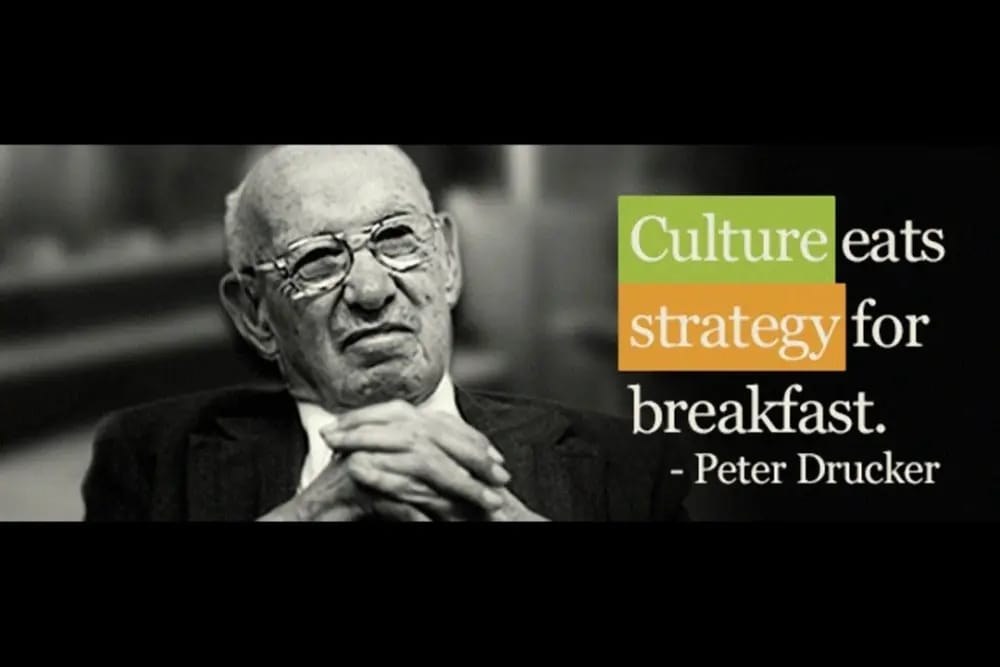
The quote is widely attributed to Peter Drucker; according to Quote Investigator, the attribution isn’t documented.
You may have the greatest product and service (the most amazing technology and infrastructure, fantastic toys for measuring customer experience, a highly trained team, and so on), but if you can’t build a corporate culture focused on customer experience, you won’t get a single step further. To get there, you need to plan training and workshops that are tailored to your organization and aren’t just for show. It’s a journey…
Five effective tactics
There’s no single recipe. The same model won’t work identically in retail, automotive, banking, telecom or healthcare. But beyond the shift to a customer-centric culture, I’d also like to share five examples of practices that can be effective:
1) Don’t make customer survey scores a trigger for individual bonuses
This is one of the most critical steps of all. Tying the income of frontline employees in particular to a single CSAT, NPS or “top-box” score is the decision that breaks the system fastest. If you don’t want to drop it entirely, use survey scores only as a warning or signaling mechanism rather than feeding them directly into bonus calculations.
2) Build a balanced scorecard instead of relying on a single metric
When you measure CX, don’t just ask “what did the customer say?” Bring the questions “what did the customer do?” and “what happened in operations?” into the system as well. For example, indicators such as repeat service visits, complaint resolution time, first-contact resolution rate, repeat calls, appointment slippage, delivery time, cancellation rate, complaint volume, retention and actual referral behavior should be read alongside the survey. That is exactly why the combination of X-data and O-data is valuable.
3) Explicitly ban the “give us a 10” culture
This isn’t just an ethical choice; it’s a data quality policy. Employees and managers need to hear this clearly: asking customers for a score, describing the score range, saying “even an 8 counts as bad,” or steering the answer with gifts or coaching is unacceptable. You can remind customers that a survey is coming, but you can’t tell them what the right answer is.
4) Make negative survey results a trigger for learning, not punishment
If the first reflex when a negative survey response comes in is to call the employee to account, the organization stops listening. Negative feedback shouldn’t be treated as something to rebut the moment it arrives; it should be a signal that kicks off a root cause investigation.
5) Take comments more seriously than scores
Negative comments that come with high scores are extremely valuable. These are the cases where customers keep the score high to protect the relationship and tell the truth in the comment box. Auto industry publications also state plainly that high scores and critical comments can contradict each other. That’s why verbatim feedback, thematic analysis and root cause clusters must make it into management reports. And don’t focus on a single channel for comments, either. With AI, it’s now so easy to track customers’ digital footprints across the internet in real time, make sense of them and, of course, internalize what they reveal — so seize this opportunity. Make a point of applying 5 Whys analysis here.
Final word
Tying customer experience metrics to employee bonuses looks very logical at first glance. After all, the intention is good: to make employees more responsive to customers. But good intentions don’t add up to good measurement design.
If an organization truly takes customer experience seriously, it should ask itself this question before turning the customer’s score into an extension of employee pay: Are we managing the experience, or the answer?
Every organization that can’t answer this question honestly eventually falls into the same trap: scores rise, internal reports look great, leadership relaxes, but the real voice of the customer grows fainter. And the auto industry has been teaching us the same lesson for years: conditioning customers to give high scores isn’t improving customer experience. It’s a gentler way of corrupting the data.
Auto industry, my dear friend, I’m talking to you; my friends in other industries, please know this applies to you, too.
What do you think?
This piece was first published in Turkish in CX Bulletin on April 11, 2026. English translation.