More Tools, Worse Experience: How Is Technology Fatigue Hurting CX at SMBs?
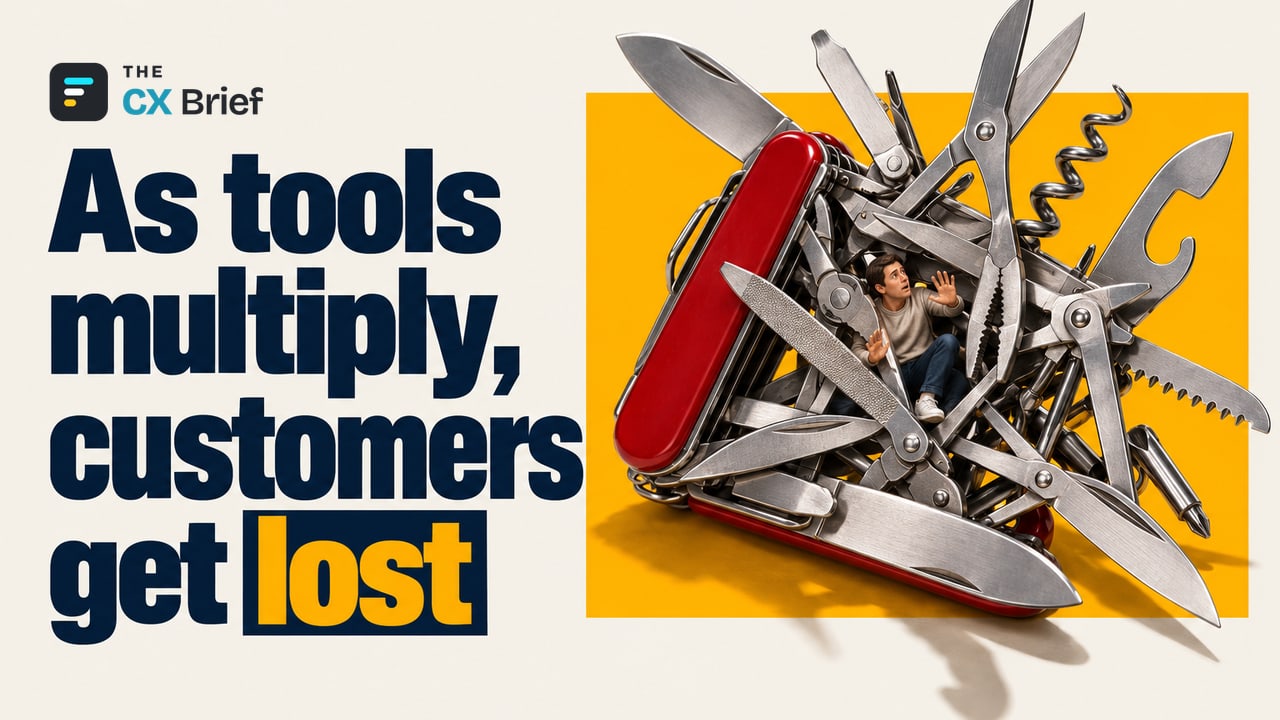
Using lots of tools doesn’t mean delivering a good customer experience.
In the previous piece, we looked at Salesforce’s Small & Medium Business Trends report from a customer experience perspective. Its most striking finding was this: Growing SMBs prioritize improving customer experience ahead of acquiring new customers. For stagnant and declining businesses, by contrast, acquiring new customers comes first. The report defines growing businesses as companies whose revenue rose by more than 5% over the past 12 months; the “Growing SMBs Prioritize Experience” section lists improving customer experience as this group’s top priority.
That distinction mattered because it told us that healthy growth comes not just from attracting more customers but from offering existing and prospective customers a better experience. But this raises a second question:
Where do SMBs struggle as they try to improve customer experience?
The Salesforce report’s answer is very clear: Technology investment is rising, but so is technology clutter.
According to the report, 76% of SMBs are spending more on technology than they did last year. That sounds like good news. But the same report also shows that SMB leaders are struggling with the pace of technological change, the number of tools and security concerns.
So the issue is no longer just “are we using technology?” The real issue is this:
Is the technology we use helping us know our customers better, or are we losing them in a growing number of systems?
Technology investment is rising, but the experience doesn’t automatically improve
For SMBs, technology is no longer a luxury. It’s very common to use separate tools for sales, marketing, payments, inventory, support, accounting, appointments, email, messaging and reporting.
At first glance, this looks like a good thing. After all, each tool solves a problem.
One tool makes it easier to track sales.
One tool collects customer messages.
One tool takes payments.
One tool sends email campaigns.
One tool manages support tickets.
But from a customer experience standpoint, this is exactly where the real problem begins.
While each tool solves its own small problem, the customer journey as a whole can break apart. The customer looks like one person in one channel and someone else in the next. The sales team doesn’t know about the customer’s latest complaint. The support team can’t see the payment history. The marketing team sends out a campaign without realizing the customer is already having a problem.
Customers don’t see this in technical terms, as an “integration problem.” They experience it far more simply:
“This company doesn’t know me.”
Yet good customer experience often starts with making customers feel this:
“They remember me. They understand me. I don’t have to explain the same thing over and over.”
More tools, more lost context
The Salesforce report paints a very clear picture on this point. It notes that the average SMB uses seven different business applications. The report says that too many tools can become overwhelming when resources and technical expertise fall short. In addition, more than half of SMB leaders say they frequently run into data inconsistencies across different tools.
This isn’t just an employee productivity problem. It hits customer experience directly.
That’s because customer experience is closely tied to the quality of information flow inside the company. When the flow of information breaks down, so does the experience.
Picture a customer.
First, they ask a question on Instagram.
Then they fill out a form on the website.
Next, they call on the phone.
After that, they make a payment.
A few days later, they open a support ticket.
If these interactions all sit in separate systems, the company can’t see the customer’s journey as a whole. Each team sees only the small piece on its own screen.
The result?
The customer explains everything again.
The employee responds with incomplete information.
Resolution is delayed.
Trust erodes.
The experience gradually becomes exhausting.
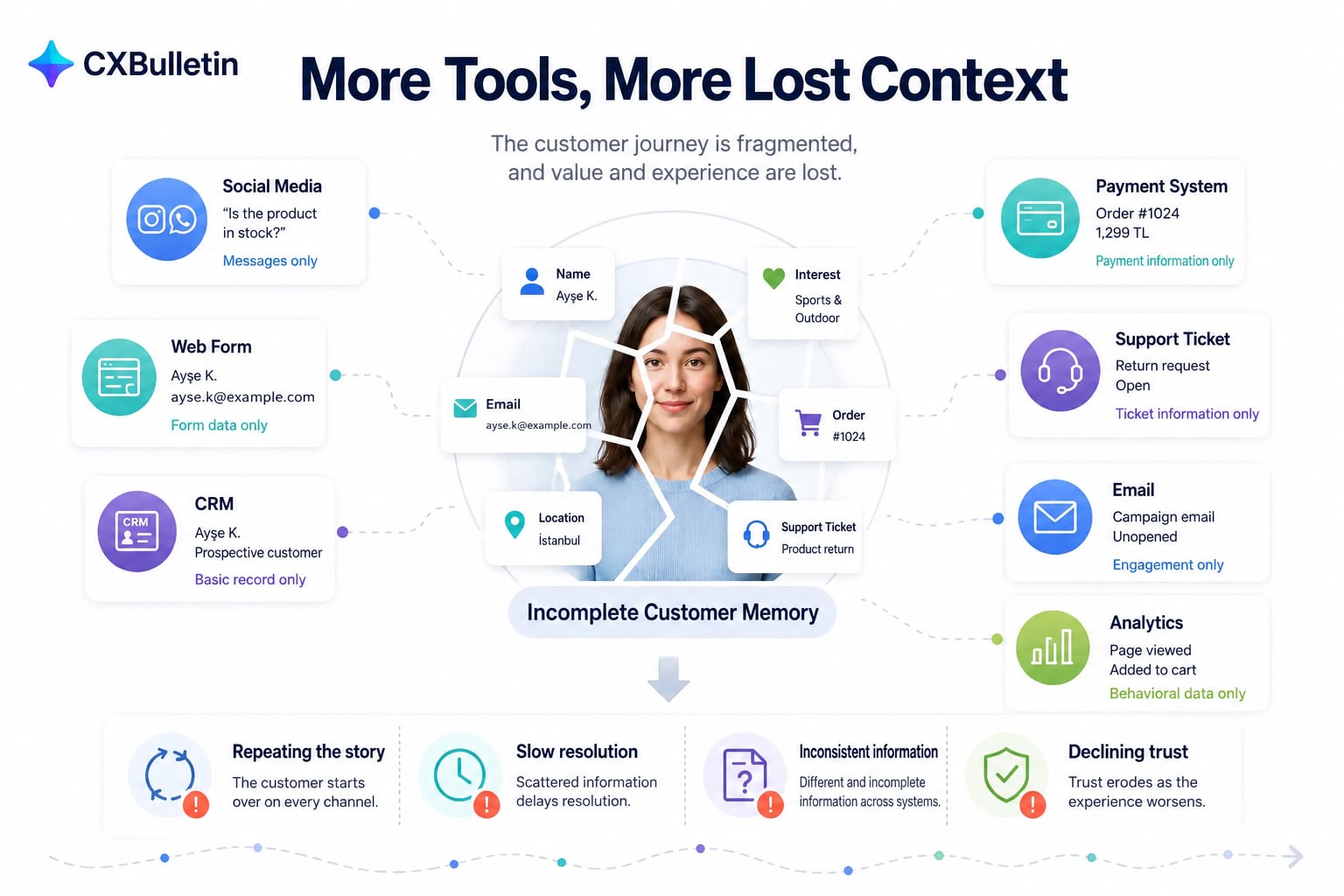
If tools aren’t connected, the customer journey breaks apart inside the company.
Customer memory that lives in people’s heads can’t scale
One of SMBs’ greatest strengths is their closeness to customers. The business owner knows the customer. The salesperson remembers the previous conversation. The person providing support knows what the customer expects. That’s a very valuable advantage.
But this advantage becomes a risk once growth begins. If customer knowledge stays in the heads of a few people, the experience becomes dependent on individuals. If one of those people is on leave, has left the company, is swamped or didn’t record the information in the system, that customer memory is lost too.
That’s why one of the most critical questions an SMB should ask as its customer experience matures is this:
Is it really the company that knows the customer, or just a few employees?
If the answer is a few employees, there’s no systematic CX in place. There’s goodwill, there’s effort, there’s a relationship, but there’s no scalable customer experience.
This difference becomes especially apparent during periods of growth. As the customer base expands, channels multiply, the team grows and processes become more complex, personal memory is no longer enough. What’s needed is institutional customer memory.
Nor is that memory simply a matter of typing names into a CRM. It means bringing together each customer’s history, problems, preferences, purchasing behavior, channel interactions and expectations in a form teams can access.
The piece I wrote on CRM becoming customer memory adds a broader perspective to this discussion. The value of CRM, after all, lies less in keeping records than in maintaining continuity in the customer relationship.
Build an experience architecture, not a collection of tools
At SMBs, technology choices often grow out of urgent needs.
At some point you need to take payments, so you buy a tool.
You need to send campaigns, so you buy another tool.
Support tickets pile up, so you set up a new system.
A reporting need comes up, so yet another dashboard comes into play.
That’s natural. In the early stages of growth, it’s even unavoidable.
But beyond a certain point, these tools add up to a sprawling tech stack. Each one is useful on its own, but when they don’t work together, they complicate customer experience instead of improving it. That’s why, before asking “Which tool should we buy?” an SMB should ask:
How do we make the customer journey smoother?
Sometimes the answer is a new tool. But sometimes it’s more valuable to simplify existing tools, integrate them, shut down the unnecessary ones, clean up the data flow or make sure teams see the same customer information.
From a customer experience standpoint, good technology architecture means:
- Customers don’t repeat themselves.
- Employees see the customer’s context.
- The experience stays seamless even when the channel changes.
- Data stays consistent.
- Support issues get resolved faster.
- Marketing becomes more targeted.
- Management can see which interactions are hurting the experience.
In other words, the issue isn’t how much technology you have. The issue is building a system that revolves around the customer.
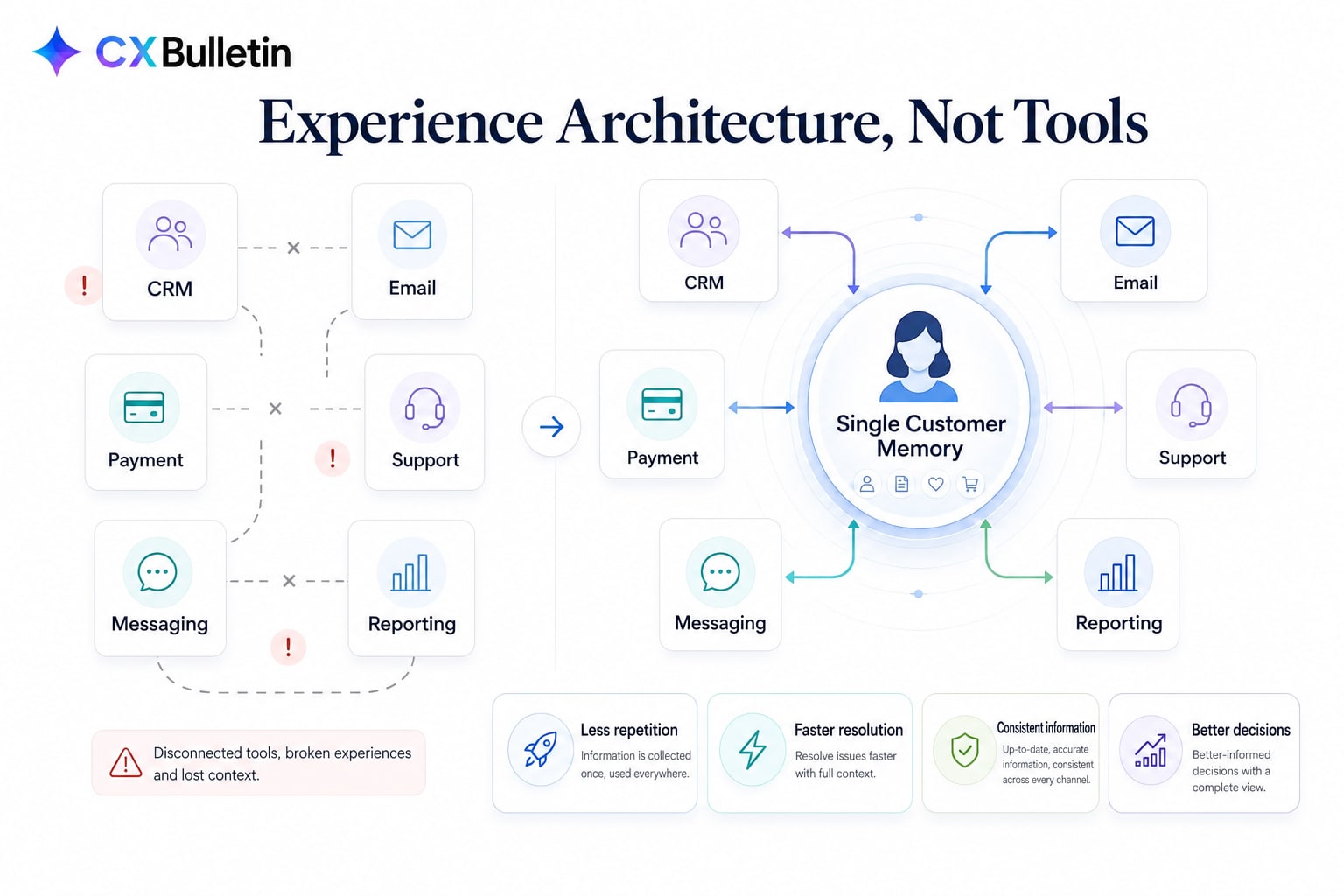
Good technology architecture builds systems that work together around the customer.
Inconsistent data leads to inconsistent experiences
At SMBs, data is often scattered across different tools.
In one system the phone number is current; in another it’s out of date.
In one place the customer shows as active; in another, inactive.
One team sees the customer as loyal, while another treats the same person as a new customer.
These seemingly small inconsistencies turn into big experience problems in the customer’s eyes.
Addressing the customer by the wrong name.
Recommending a product the customer has already bought.
Calling again about a problem that has already been solved.
Sending a cheerful campaign message to a customer who has complained.
Acting as if a long-pending support ticket doesn’t exist.
All of these start out as data problems but turn into relationship problems for the customer.
That’s why the emphasis the report places on data quality matters so much. Among SMB leaders, 80% say improving data quality will increase revenue. In addition, 66% of SMBs plan to increase their investment in data management over the next year.
This finding isn’t just a matter for technology teams. It matters to customer experience, marketing, sales, support and operations teams alike, because if customer data is flawed, it’s only a matter of time before friction shows up somewhere in the experience.
For a broader data perspective on this topic, the Salesforce State of Data and Analytics report can be a useful complementary resource. In the AI era especially, data quality is no longer just a reporting issue; it’s becoming a direct question of experience and decision quality. Let’s put that more simply, in CX terms:
The more clearly a company sees its customers, the better it can treat them.
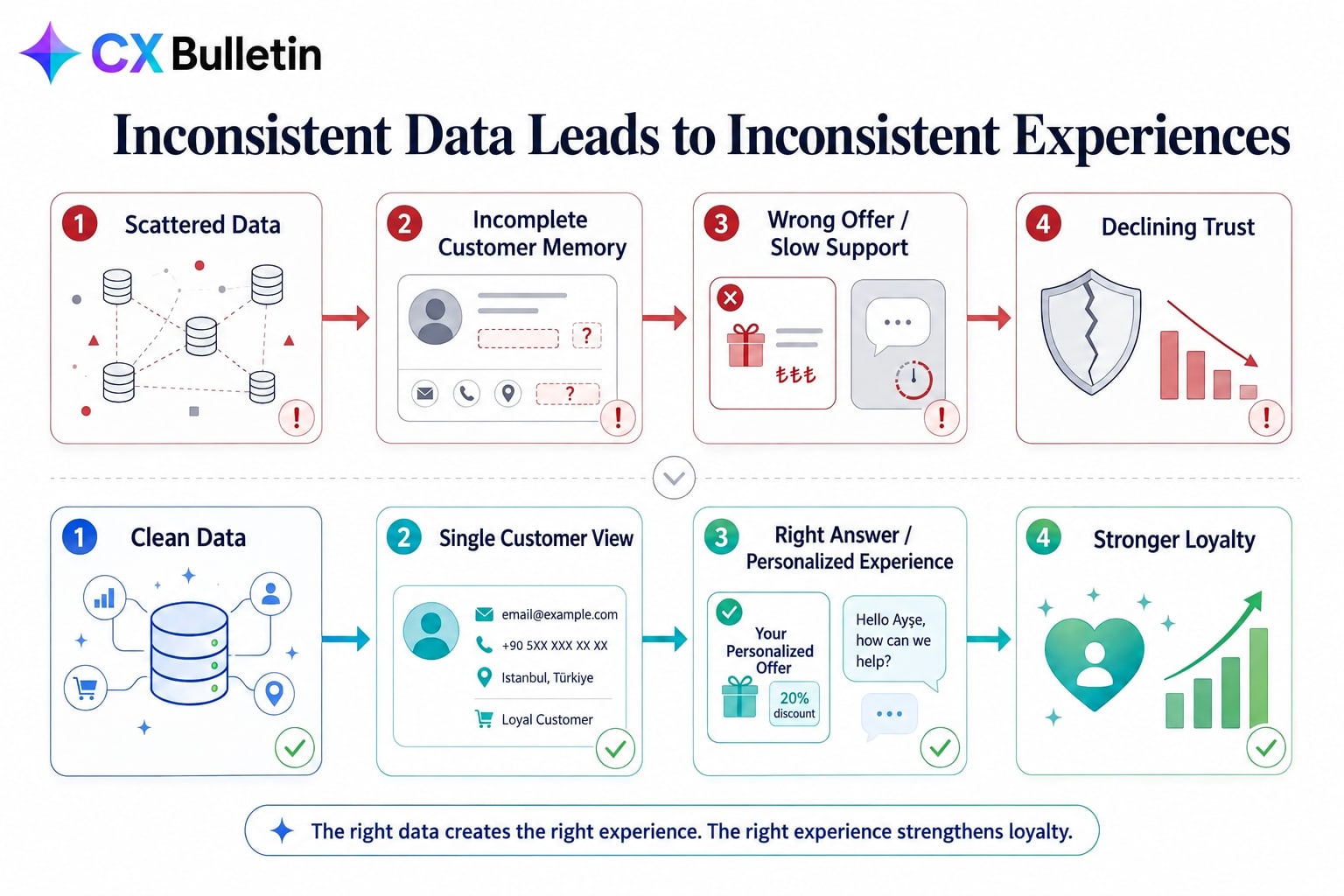
If customer data is scattered, the experience becomes fragmented too.
Technology fatigue also damages employee experience
Technology fatigue at SMBs shouldn’t be viewed only from the customer’s perspective. It also puts a serious burden on employees.
If employees have to look at five different screens to respond to a customer, delivering a good experience gets harder. If they have to bounce between the CRM, email, the payments dashboard, the support system and the messaging app to find a piece of information, they lose time and become more likely to make mistakes.
And that shows up directly in the customer experience.
After all, employee experience and customer experience aren’t separate worlds. If employees struggle to understand the system, customers struggle to understand the company. If employees can’t get to the right information, customers can’t get the right answer. If employees are worn out switching between tools, customers wait.
That’s why good CX requires simplifying not only customer touchpoints but also employees’ behind-the-scenes workflows.
This is especially important for SMBs. Teams are small, time is limited and resources are tight. Large companies may have separate teams that can compensate when something goes wrong. At an SMB, by contrast, the mess reaches the customer much faster.
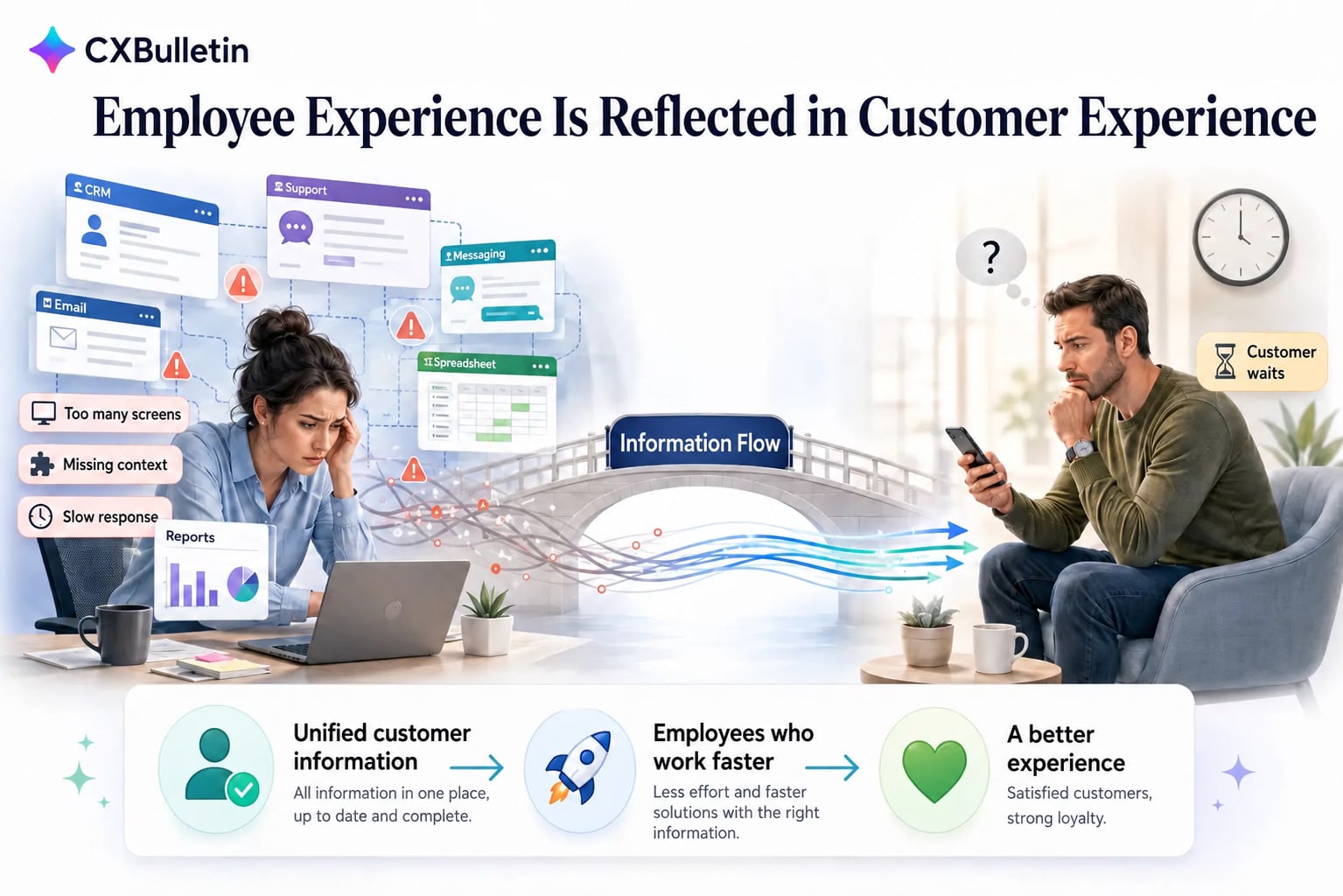
If employees can’t easily get to the right information, customers can’t get the experience they need either.
AI can’t fix this mess on its own
AI is a major opportunity for SMBs. According to the report, 9 in 10 SMBs using AI see more efficient operations. The report also notes that AI can improve customer experience through speed, personalization and scalability. But for the purposes of this piece, the key point is this:
AI won’t pull scattered customer memory back together on its own.
If customer data is spread across different tools, AI works with incomplete information. If systems aren’t connected, AI can’t see the customer’s whole story. If processes are convoluted, AI can make them run faster, but not necessarily better. That’s why SMBs should plan any AI investment hand in hand with simplifying their technology and ensuring data integrity first.
For AI to truly contribute to customer experience, it needs three basic foundations:
- Customer data that is clean and accessible
- Systems that talk to one another
- Employees who can use AI output within the customer’s context
Otherwise, AI may just produce faster campaigns, more messages and an experience that is more automated but colder. That’s why AI deserves a more detailed look in the third piece of the series. The lesson of this piece is more fundamental:
First, SMBs must not lose the customer inside their own systems.
7 CX questions to reduce technology fatigue at SMBs
If SMBs want to evaluate their technology investments from a customer experience perspective, they can start with these questions before reaching for complex models:
- Do customers have to provide the same information more than once?
- Can the sales, support and operations teams see the same customer history?
- When customers switch channels, does the experience pick up where it left off?
- How many different screens do teams have to look at to respond to a customer?
- Which tools actually improve the experience, and which ones just create clutter?
- Is customer data current, clean and consistent across teams?
- Are integration, ease of use and scalability considered when buying new technology?
These questions may look simple, but for most SMBs they reveal what their CX is really like. That’s because customer experience usually breaks down not in big strategy presentations but in these small moments of friction.
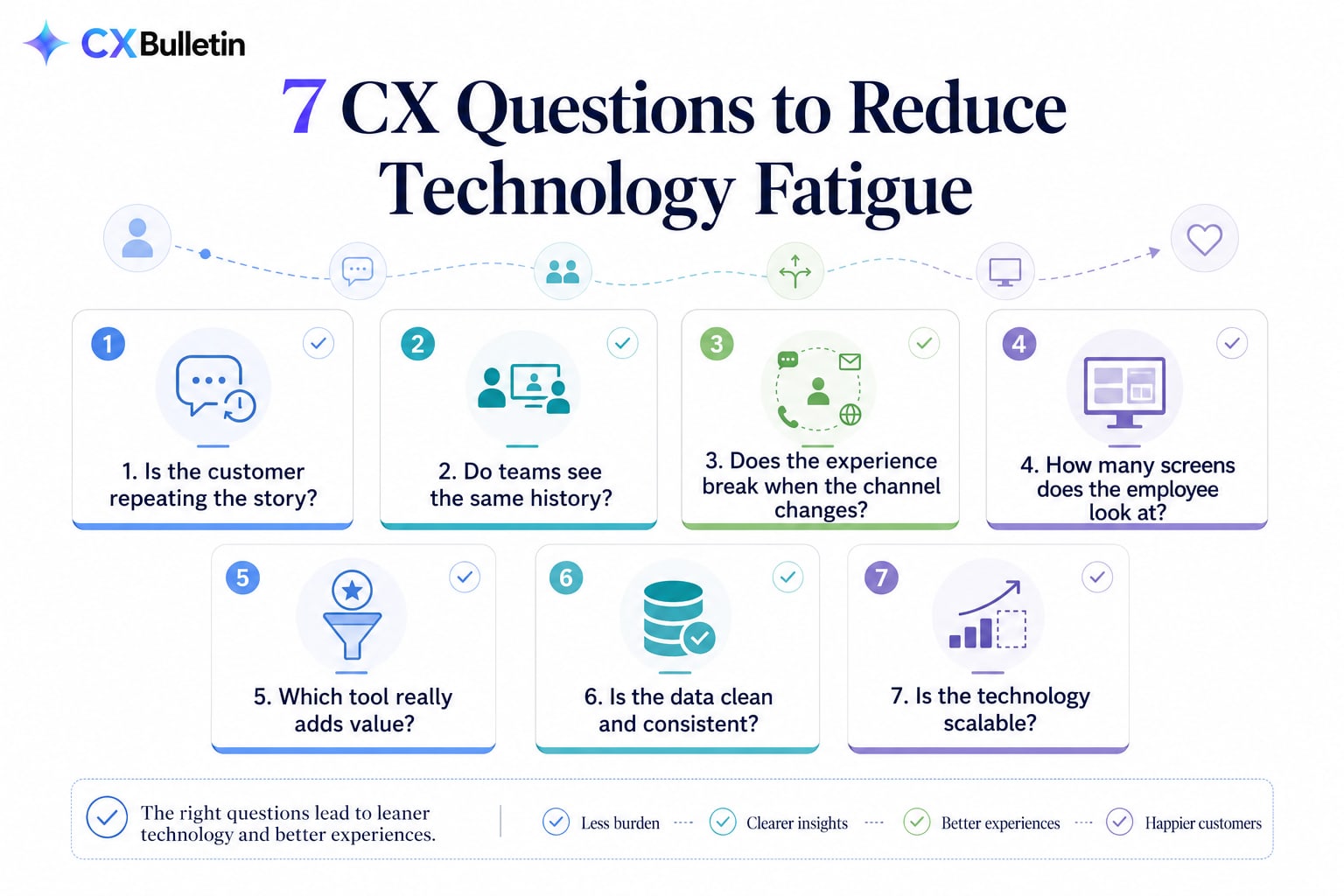
At SMBs, a good technology decision is one that simplifies the customer’s journey.
Conclusion: The SMB problem isn’t a lack of technology but a fragmented experience
The Salesforce report shows us this clearly: SMBs are investing in technology. In fact, most are spending more than they did last year. But technology investment alone doesn’t mean good customer experience. The real difference lies in how technology is organized around the customer.
If tools are disconnected, data is inconsistent, employees can’t see the context and customers have to explain themselves all over again at every touchpoint, technology makes the experience exhausting instead of improving it.
But if an SMB simplifies its tools, centralizes customer information, cleans up its data and supports employees with the right context, technology becomes a real CX advantage.
That’s why the second lesson of the series is this:
Growing SMBs don’t just use more technology. They build an experience system that remembers customers better, creates less friction and works more consistently.
In the next piece, we’ll look at the third pillar of this system:
AI, data and trust.
After all, for SMBs, the real value of AI lies not just in getting work done faster, but in being able to scale a better customer experience.
This piece was first published in Turkish in CX Bulletin on May 13, 2026. English translation.