All Quiet on the CX Front: 2026 CX Trends and the Perception Gap
According to Medallia's report, the perception gap between brands and customers remains alarmingly wide.

The report Medallia published just a few days ago, based on input from 552 professionals and more than 1,500 consumers, lays bare a large and dangerous blind spot in the industry. According to the data, 83% of professionals in the industry believe their own brand delivers an above-average experience. What’s more, 66% of practitioners think everything has gotten better compared with last year. But turn to the consumer side, and we’re in for a rude awakening: only 17% of consumers say they actually feel that improvement. Hasn’t this always been the picture in the many reports we’ve shared and discussed with you lately?
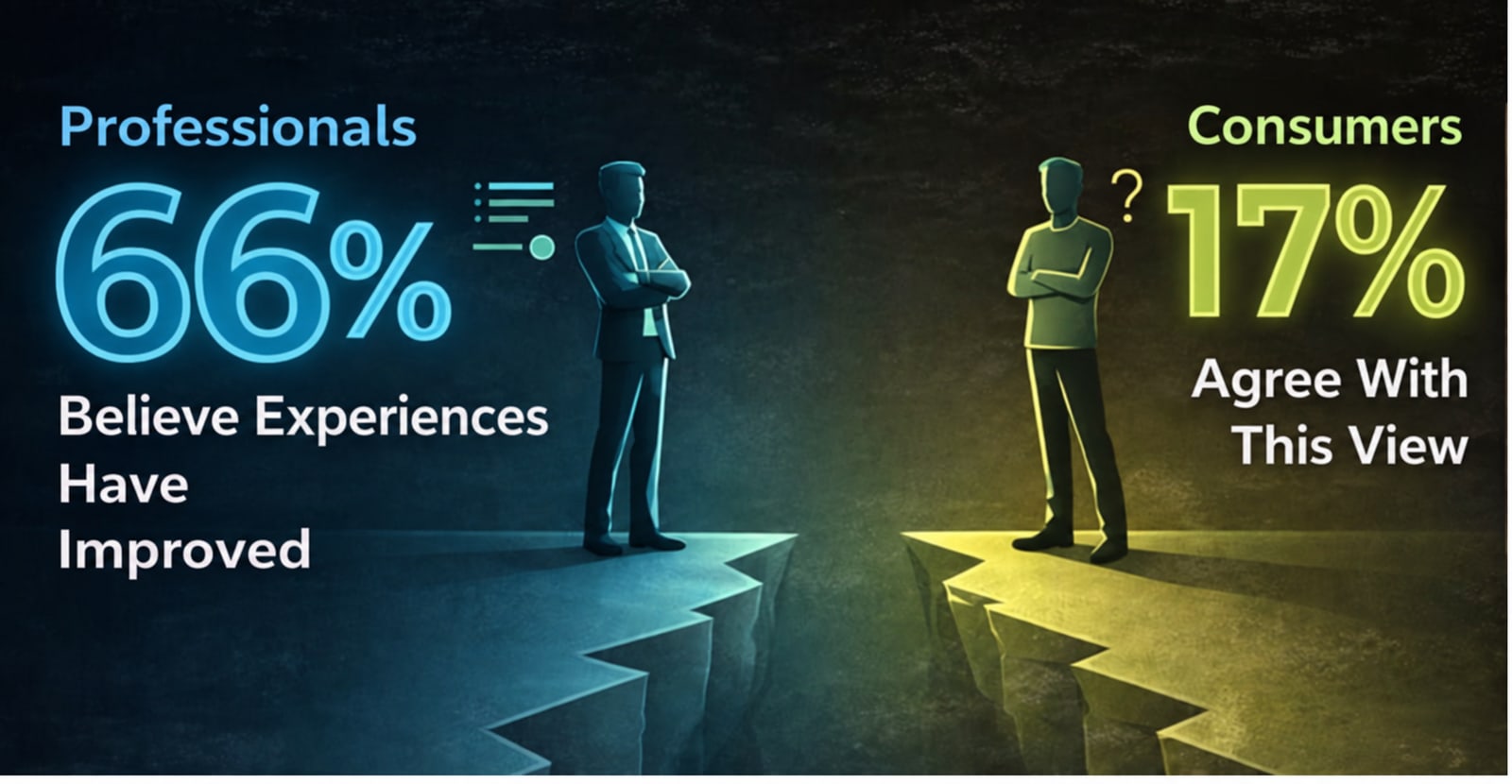
In this new era, with economic pressures driving consumers to scrutinize every purchase and AI pushing the limits, there is a huge gap between companies’ confidence in themselves and the reality on the ground.
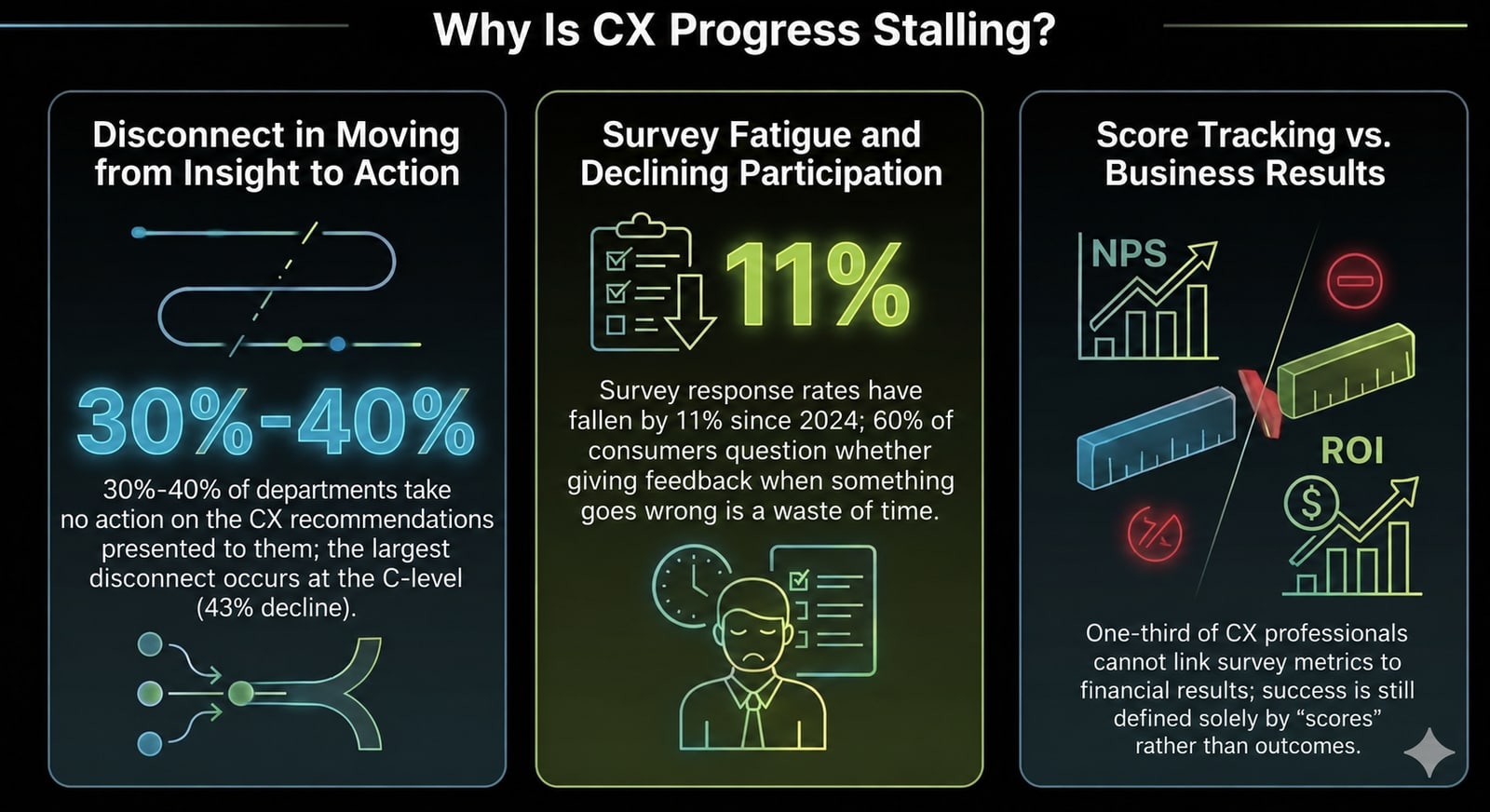
The report also reinforces a deeply troubling point: most brands still try to assess their entire strategy and measure their success only through surveys. But Medallia’s data shows that consumers have now completely succumbed to survey fatigue. Open rates for feedback emails have fallen 6% and survey response rates 11% compared with last year. Among consumers, 60% question whether reporting a problem to a company is worth their time. And 75% of hands-on practitioners have now begun to admit that surveys alone aren’t enough to capture the whole picture.
Insights That Never Turn into Action
The way this limited data goes to waste inside organizations is one of the most disheartening parts of the picture. The report shows very clearly that 30% to 40% of the departments that receive customer experience recommendations take no action at all on those insights. If experience teams don’t report directly to a CCO or CXO, the rate at which senior management takes action drops from 49% to 37%. Our criteria for measuring success are, unfortunately, far from visionary as well. While 47% of teams see success merely as “improvement in metric trends,” only 38% define success directly in terms of financial outcomes such as revenue growth or retention. More dramatic still, one in three professionals can’t draw any link between their company’s survey scores and its financial performance.
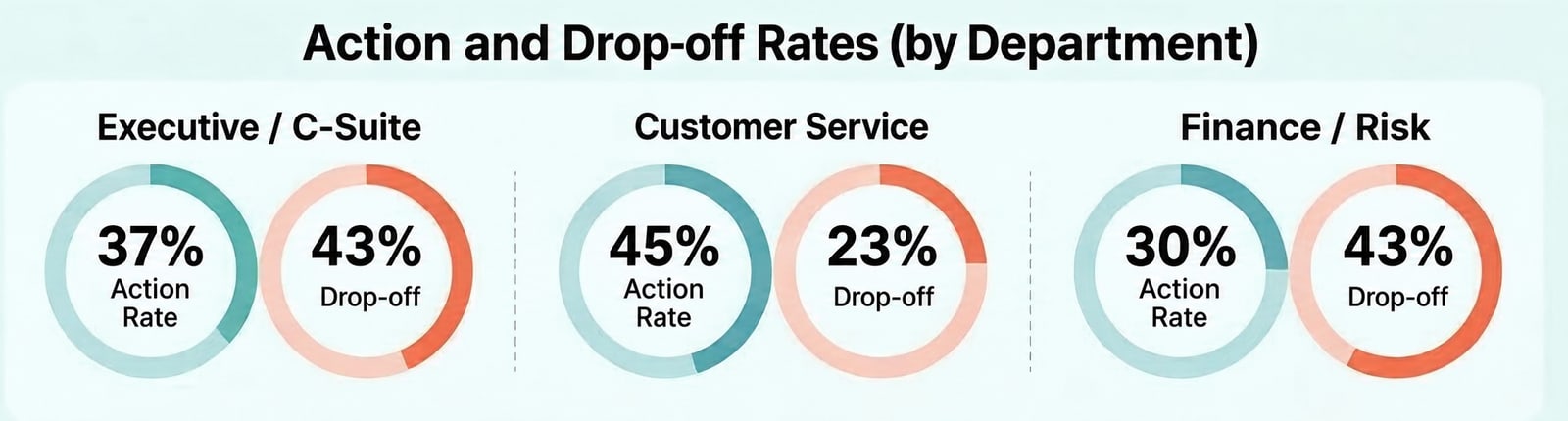
Source: Medallia, 2026 State of CX Report. The percentage declines are stated in the report; the action rates were read off the report’s chart.
The Fragility of Loyalty and “Trust” as a True Deciding Factor
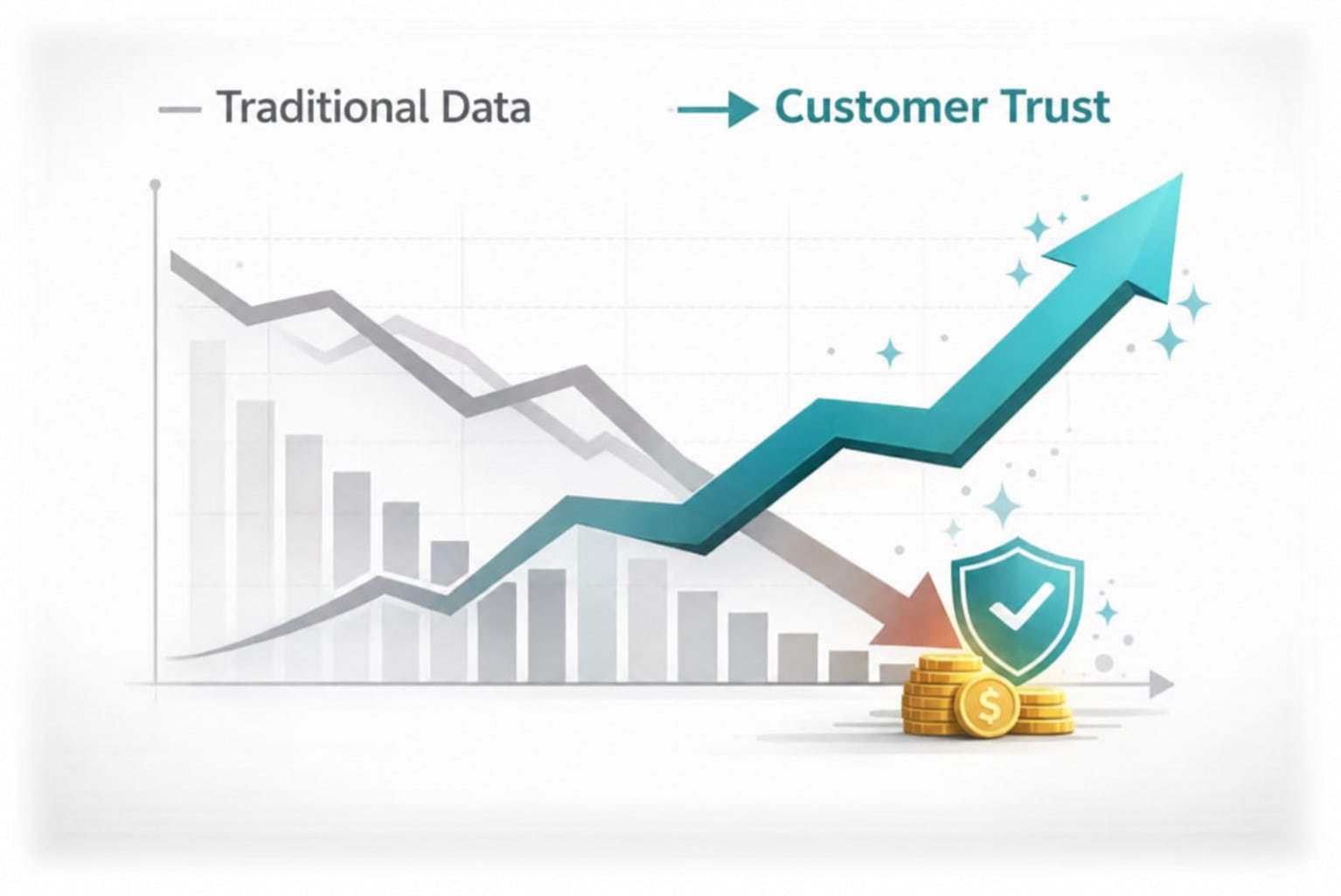
Among consumers, 30% say they ran into a problem in their most recent interaction, and when that problem isn’t resolved, one in six switches to a competing brand. Entirely preventable operational failures, such as making 44% of customers repeat the same information more than once across different screens or agents, accelerate this loss of loyalty. While price and AI use weigh heavily in everyone’s decisions, consumers rank data privacy and trust far higher than professionals assume. All else being equal, 64% of people choose one brand over another simply because they trust it more.
The AI Reality and the Human Touch’s Margin for Error
Now for 2026’s real playmaker: 81% of organizations have clear goals for AI. But investment is still largely focused on getting back-end data analytics in order rather than on customer-facing innovation. On the consumer side, while 68% of people communicate smoothly with AI for routine tasks such as checking an order status, a massive 73% insist on having a human on the other end once the issue calls for complex technical support.
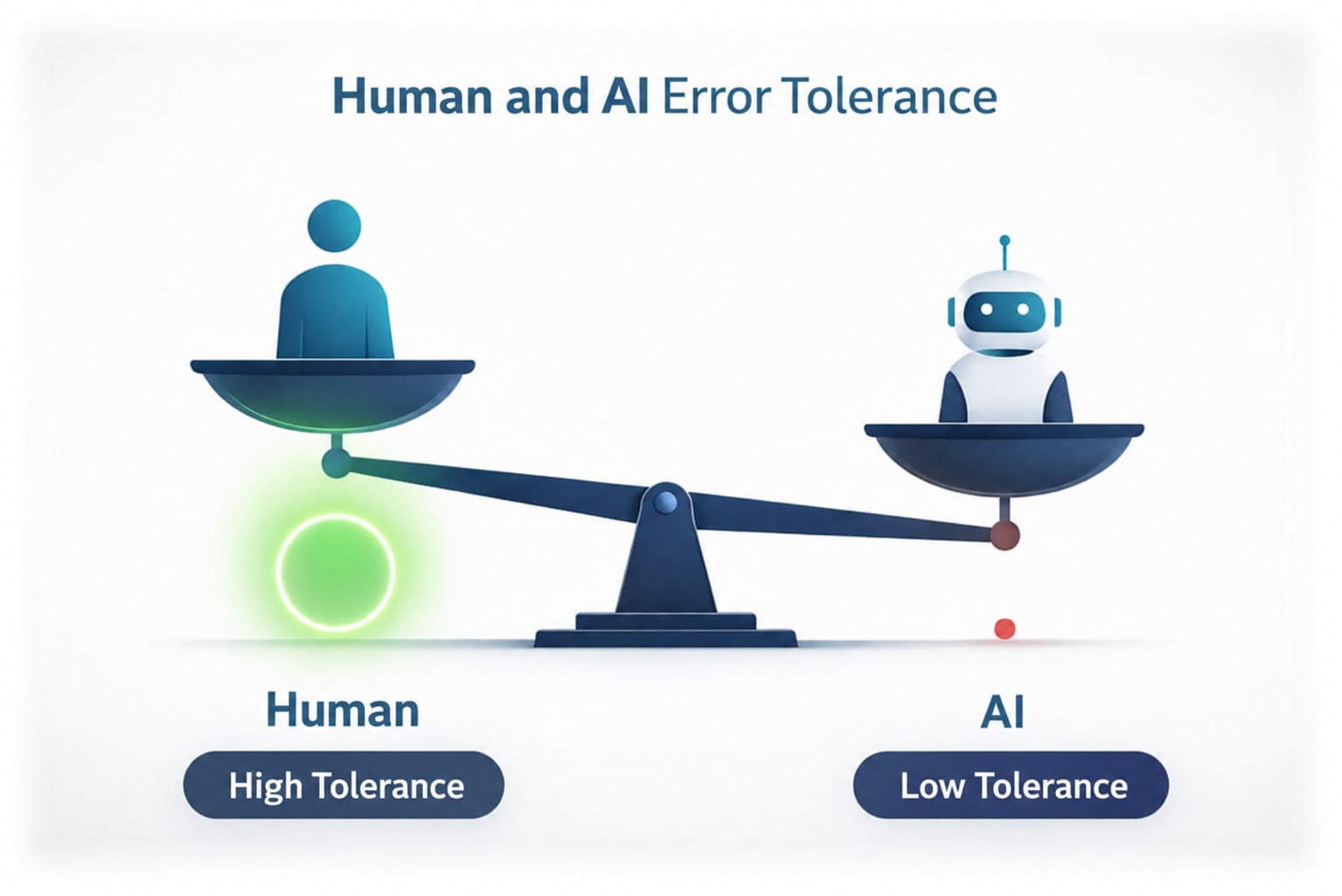
This is exactly where the human connection and empathy come into play. Among consumers, 42% find an employee’s mistake more forgivable than an AI’s mistake; only 7% think the opposite. Consumers aren’t closed off to new technologies (in fact, for one in six, the most recent interaction took place entirely with a bot), but their tolerance for machine errors is close to zero.
Medallia’s rich dataset, and especially the barriers created by technology and integration constraints (35%) and unproven financial returns (32%), send the same stern message to every leader charting strategy for 2026. The days of merely tracking scores and painting a rosy picture in reports are over. Organizations that can’t tie customer experience to the company’s financial realities and can’t integrate AI into their processes without destroying the human touch are doomed to lose in the new era, despite the high scores they place so much faith in.
This piece was first published in Turkish in CX Bulletin on March 11, 2026. English translation.