A Silent Threat in Broadband: How to Manage Customer Churn When Subscribers Can Switch Instantly
With fixed broadband about to enter a new era of seamless switching via e-Devlet, the days of using last-minute offers to win back customers who have decided to cancel are officially coming to an end. As the industry's cumbersome "retention desks" fade into history, the new rule of competition will be proactive experience design that resolves issues before customers even notice them.

The new BTK draft, expected to take effect on June 1, 2026, has brought to light a truth the telecommunications industry has long swept under the rug. The most striking aspect of this regulation, as reported in detail by Dünya Gazetesi, is not so much the shorter switching times as the outright ban on the current operator’s attempts to “talk the customer out of” leaving.
The system that had been in place for years was all too familiar: a dissatisfied customer would call to cancel, be put through to a specially trained “retention desk” and be offered attractive last-minute discounts in an effort to keep them. That door is now closed. Once customers decide to leave and give their approval via e-Devlet, there is no longer any touchpoint where they can be talked out of it. This fundamentally changes the philosophy of churn management. The solution now lies not in the moment of crisis, but in perfecting the experience before that crisis ever arises.
The Warning Signs of Silent Departures
Reactive retention strategies are really nothing more than a grand illusion. Focusing only on rescuing the customers who complain or call the cancellation line means ignoring the bulk of the iceberg below the surface. According to the customer retention strategies report published by CSG, 56% of consumers quietly abandon a brand after a bad experience without ever complaining.
In other words, with the convenience of e-Devlet in place, that “silent” group of customers whose connection speed drops or whose bill unexpectedly balloons will switch to a rival operator without ever dealing with you again. There is no choice but to redirect the enormous budgets spent on retention desks toward getting service quality right from the start and toward a smooth customer journey.
The World Has Already Moved to a Proactive Model
Telecom giants operating to international standards build customer loyalty not through last-minute bargaining in the contact center but through data analytics, AI and foresight. A modern operator has to notice the weak signal on your modem before your connection starts freezing and you get annoyed.
According to a recent report by Bain & Company examining the use of AI in telecommunications, the industry now has to move from a “reactive crisis management” mindset to an AI-powered “proactive decision-making” process. Thanks to algorithms that analyze patterns in huge datasets, outages are prevented before they happen, which translates directly into customer trust and lower operating costs. Indeed, McKinsey data from 2024 backs up this transformation with numbers:
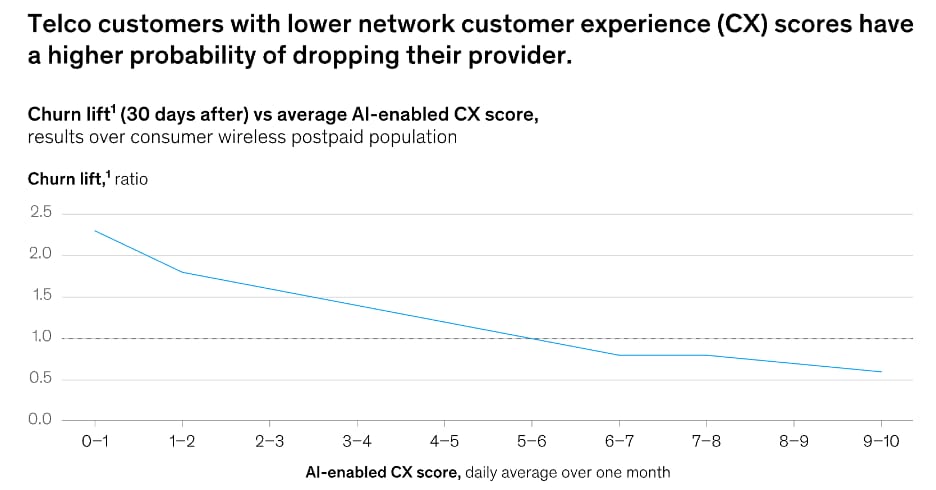
The Impact of Customer Experience Score on Churn Rate in Telecom
The same report, even back in 2024, also lays out the formula for using AI-powered customer experience data to improve churn models and, ultimately, the churn rate:
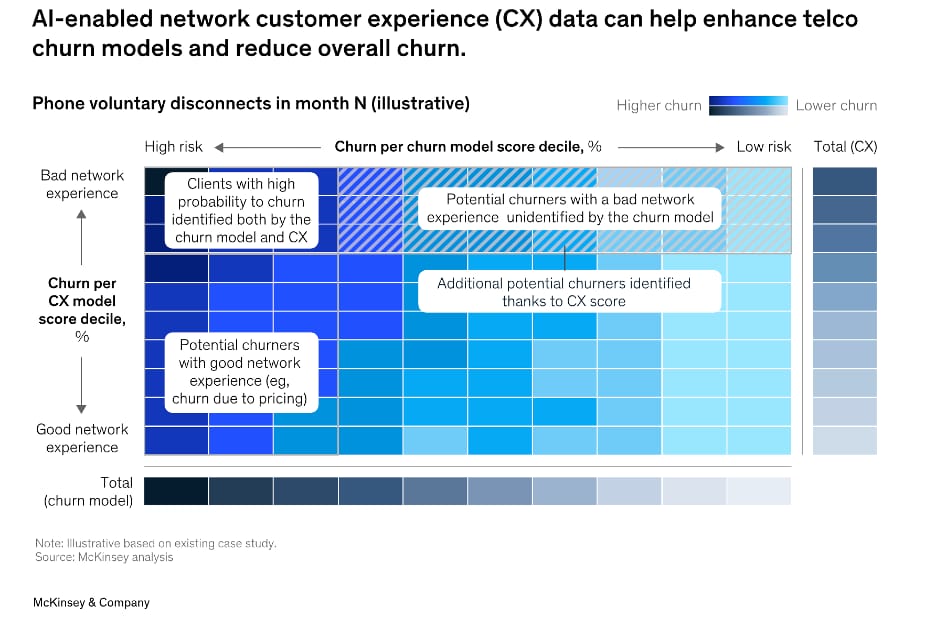
AI-Powered Churn Prediction Model and Customer Experience
For example, when a regional infrastructure problem is detected, letting the contact center become swamped is an old-world reflex. The new-generation proactive approach is to act the moment the problem is detected: to send a message to the subscriber’s mobile phone such as “We’ve added 10 GB of free mobile data to your line in case of a brief outage in your area,” to track the problem before any complaint comes in, to keep the subscriber informed at every stage – and through their preferred channel – and to make them feel valued. When a customer who is having a problem receives this message, instead of hunting for the cancel button, complaining or broadcasting their frustration to much wider audiences, they renew their trust in the brand. In a world where canceling via e-Devlet takes just a few seconds, the trust you build by getting ahead of problems is the only thing that will save you. And isn’t the magic of customer experience this very method of building trust?
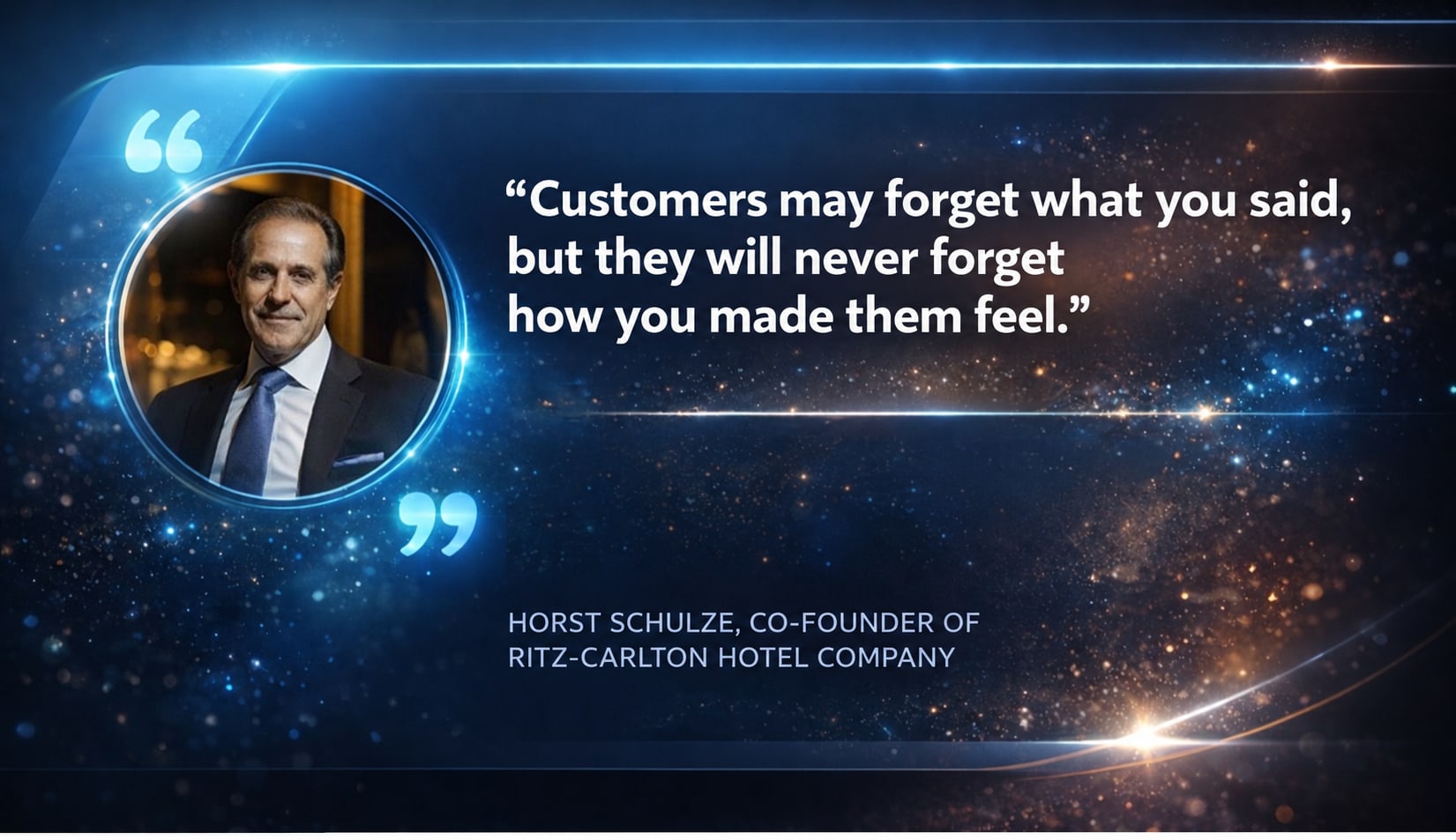
The Power of Emotion in Customer Experience. This saying is often attributed to Horst Schulze or Maya Angelou; according to Quote Investigator, its earliest known source is Carl W. Buehner.
The End of Pricing That Punishes Loyalty
Another painful truth the industry has to face is its loyalty policies. In the current system, the red carpet is rolled out for new customers, while loyal subscribers who have spent years with the same operator are condemned to the highest rates. According to Simon-Kucher’s analysis of telecom customer loyalty, 60% of subscribers say the reason they are not considering switching operators is simply that they are highly satisfied.
People want more than just a low price; they want to pay for a reliable, transparent experience. But if you persist with this pricing policy that punishes loyalty and rewards only those walking through the door for the first time, you will create a base of “bargain hunters” who, thanks to the ease the new law provides, switch operators every year like clockwork.
In short, June 1, 2026, is not a threat to the telecom industry; it has the potential to be a historic turning point at which quality and genuine customer experience finally take center stage in competition. The way to keep customers is no longer to lock the exit door, but to make the room so comfortable and frictionless that they never want to leave.
This piece was first published in Turkish in CX Bulletin on March 30, 2026. English translation.